The Workforce Innovation and Opportunity Act (WIOA) is designed to help job seekers access employment, training, education, and support services that improve their prospects in the labor market. WIOA also supports employers by connecting them with skilled talent. While states routinely track job seeker outcomes two and four quarters after exit, less is known about participants’ longer-term experiences. This analysis addressed that gap by examining wage records for five years after program exit for WIOA Titles I and III participants in Michigan.
Note: This study examined wage and employment outcomes for individuals exiting WIOA Title I and III programs in 2017 and 2018 and followed their employment outcomes for five years. The COVID‑19 pandemic significantly affected economic conditions and wage data during the study period.
Key Findings
-
Participants who remained employed experienced substantial wage growth over the five years observed. For the full study population, median wages increased between 20 and 32 percent across the WIOA programs examined.
- Those with lower pre-program wages saw comparable, and sometimes higher, wage growth. However, they both started and ended at lower income levels than the total study population.
- Participants who found employment typically maintained it over the long term. The majority appeared in wage records for 4 to 5 years post-exit, demonstrating sustained employment retention.
Median wages rose consistently after WIOA program exit over the five study years.
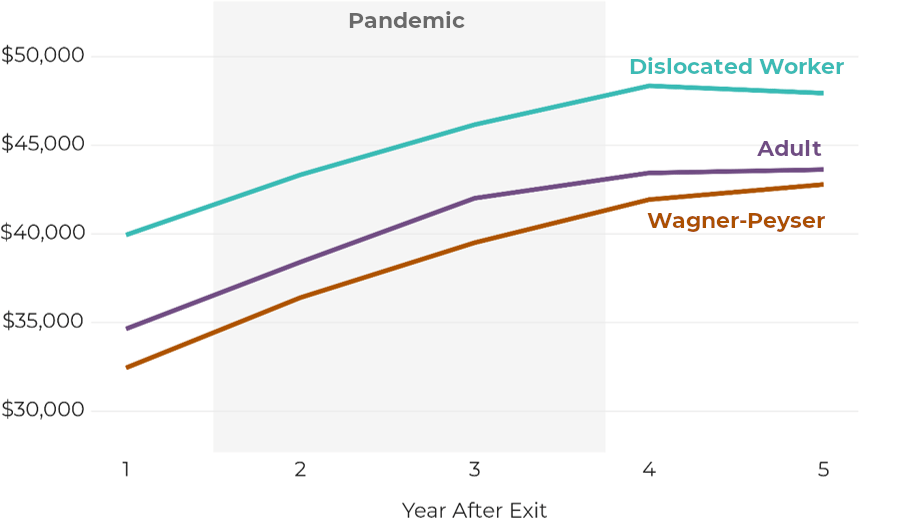
Figure 1: Wages Trends for Full Study Population (Real Wages in 2023 Dollars)
Source: One-Stop Management Information System; Unemployment Insurance Wage Records
View/Download Data Table
Over the five study years, median wages steadily increased for those who remained employed. They also increased significantly for different subsets of the study population, including individuals with lower incomes prior to registration, more barriers, and more limited work histories, though in these cases, wages also started and ended at lower levels than for the full study population.
Figure 1 displays wage trends for the full study population by program. Median wages rose significantly across the five years after program exit, regardless of WIOA program. After five years, wages increased by 26 percent for the WIOA Adult program, 20 percent for the Dislocated Worker program, and 32 percent for the Wagner-Peyser program.
Wages rose over time for lower-income earners, but the earnings gap did not close.
Figure 2: Wage Trends by Program for Wage Earners below the 40th Percentile Before Program Entry (Real Wages in 2023 Dollars)
![[MR4.1]A line chart showing median wage trends for lower-income participants in the Adult, Dislocated Worker, and Wagner-Peyser programs over five years after exit. Each program displays an upward trajectory, though at lower wage levels than the full study population. Wagner-Peyser shows the steepest growth, and Dislocated Worker remains the highest-earning group across the timeline.](/mcda/-/media/Project/Websites/mcda/assets/Insight-Media-Files/Michigan-WIOA-Outcomes/Figure-2-Wages-Low-Income.png?rev=3defccb979e349d88c2e659ebf03fa61&hash=8E760B2397EC9C391167115E4AD41BC6)
Source: One-Stop Management Information System; Unemployment Insurance Wage Records
View/Download Data Table
Here, lower income participants are defined as those earning less than the 40th percentile wage before entering a WIOA program. Figure 2 shows that these individuals’ wages followed the same upward pattern seen in the full study population, but at lower levels across all programs. However, their percent growth over the five years was comparable to, and in some cases higher than the percent growth observed in the full study population. Wage increases reached 36 percent in the Adult program, 26 percent in the Dislocated Worker program, and 46 percent in Wagner‑Peyser.
The greatest share of program exiters remained employed most quarters.
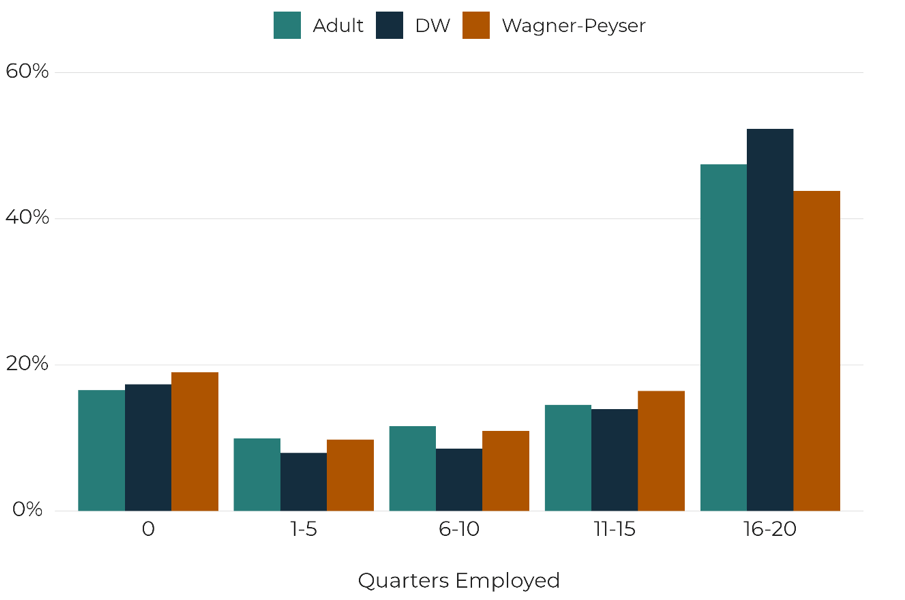
Figure 3: Percentage of Individuals in Each Program Employed by Number of Quarters
Source: One-Stop Management Information System; Unemployment Insurance Wage Records
View/Download Data Table
Most individuals who became employed remained employed for at least 16 quarters, or four years, post-exit, as shown in Figure 3. The second largest group consisted of participants who did not appear in Michigan wage records. However, absence from wage records does not necessarily indicate that an individual is not employment. Individuals may be self-employed, working in an unemployment insurance-exempt industry, or employed out of state.
Conclusion
This article examined the long-term effects of WIOA services on participants’ labor market outcomes, particularly wages. Overall, wages increased for individuals who remained employed, with growth observed across several groups, including participants who entered the program with lower incomes. Participants who obtained employment also tended to remain employed throughout most of the period studied. This pattern suggests that most participants are likely to benefit from the wage trends observed.