The web Browser you are currently using is unsupported, and some features of this site may not work as intended. Please update to a modern browser such as Chrome, Firefox or Edge to experience all features Michigan.gov has to offer.
Invasive Species: Common Butterbur
What is common butterbur?
-
(Petasites hybridus)
Other common names: pestilence wort, bog-rhubarb, butterfly-dock
Common butterbur is a large-leaf perennial with noticeable early spring flowers and a preference for moist areas. It spreads by seeds and underground stems and fragments, physically and chemically crowding out important native vegetation and contributing to erosion. It also disrupts the food web by reducing food for herbivores including insects.
Identify
-
What to look for
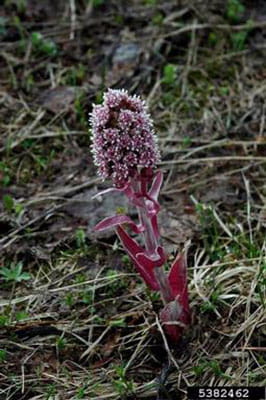
- Large club-shaped pink cluster of flowers low to the ground in early spring, before leaves emerge.
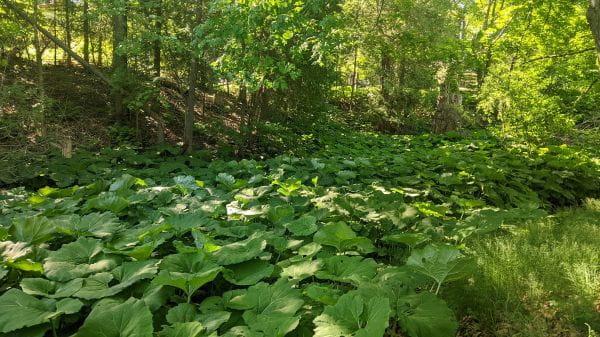
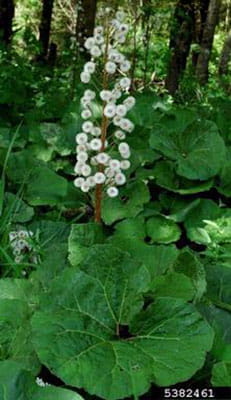
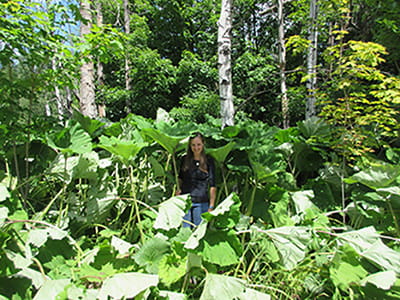
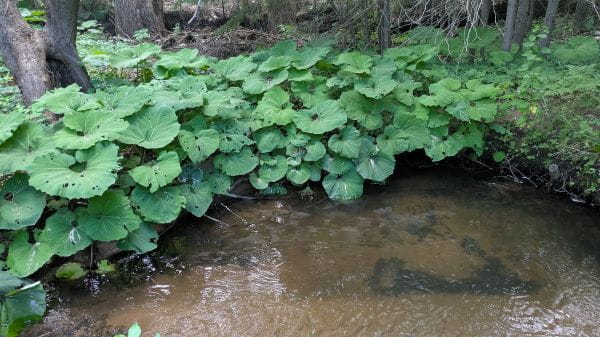
- Leaves emerge from the base of the plant and are large (up to 3 ft wide), kidney-shaped and have scalloped edges and white fuzzy undersides.
- Flower stalks grow throughout the summer, turning into tall, loose clusters of fluffy seeds.
- The plant is sizeable overall, often about 3 ft tall, and grows in dense clumps and thickets.
Common butterbur photos
The following images can help identify common butterbur. Click on each photo for descriptions.
Report
-
To report suspected common butterbur:
- Use the Midwest Invasive Species Information Network online reporting tool.
- Or - download the MISIN smartphone app and report from your phone.
Note the location of the suspected common butterbur and be sure to include at least one photo of the plant to help with verification.
Species information
-
Habitat
Common butterbur prefers moist areas with at least part shade, like streambanks and wetland edges. It often originates near human settlement, as it was originally planted for garden and medicinal purposes, but it can spread far beyond its planted space.Range
Native Range: Common butterbur is native to Europe and Asia.
US Distribution: Found escaped from cultivation in the Great Lakes region and areas of the northeastern U.S. View the EDDMapS distribution map for common butterbur.
Michigan Distribution: First collected outside of cultivation in 1976; currently established in parts of the central Upper Peninsula, with scattered populations throughout Michigan. View the MISIN distribution map of common butterbur observations.
Local concern
Butterbur outcompetes native plants, leaving bare earth underneath which contributes to erosion. It doesn’t support the native food web, as few insects or other herbivores eat it. It is allelopathic, releasing chemicals that hurt the growth of plants and may impact water quality.How it spreads
Common butterbur can spread by seeds, underground stems (rhizomes) or rhizome fragments. It also spreads when planted in gardens.