The web Browser you are currently using is unsupported, and some features of this site may not work as intended. Please update to a modern browser such as Chrome, Firefox or Edge to experience all features Michigan.gov has to offer.
Stop Invasive Species!
-
Graphic featuring a boat moving across the water and the message, "Stop invasive species. Clean, Drain, Dry, Dispose."
What is an invasive species?
It’s a plant, animal, insect, disease, or other type of species that is not native to Michigan and causes some type of harm. The harm could be to the environment, economy, or human health. -
What is NotMISpecies?
NotMISpecies is Michigan's campaign to prevent the introduction and spread of invasive species by helping everyone become aware of the problem and discover what they can do to help!
They're

Don't Make Them Yours!
Why should we care about invasive species?
Because of the harm they cause!
-
A dense bed of invasive parrot feather covers the shoreline of a pond.
Environment
We all have our favorite outdoor places in Michigan, whether it's a lake, trail, fishing hole or campground. Invasive species can change these places in lots of ways - like outcompeting our native species, leaving them without food or shelter, or overtaking and changing the landscape. This can affect the ways we enjoy the outdoors. -
One pair of hands holds a salmon, while another pair of hands holds a sea lamprey that was removed from the salmon, leaving a round hole in the fish's side.
Economy
Invasive species are expensive to control. For instance, millions of dollars are spent each year to to prevent sea lamprey populations from becoming so big they devastate our native lake trout and other sport fish in the Great Lakes. -
Zebra mussel shells cover a sandy shoreline.
Human health
Some invasive species can physically hurt people. Zebra mussel shells washing up on shorelines can be a hazard to anyone swimming or walking along the beach. The sap from the giant hogweed plant can cause a painful rash on skin exposed to the sun.
-
This applies to all watercraft, from tubes and floats to kayaks to catamarans! Check any vessels and gear that have touched the water.
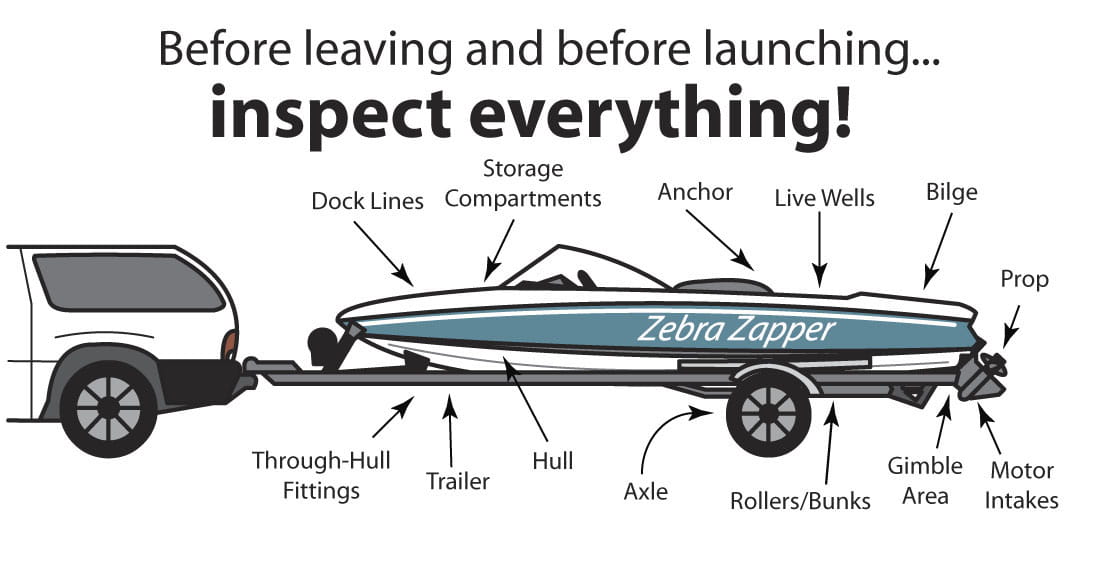
Key areas on boats and trailers to inspect for plants, animals, mud and water:

It's easy to stay in compliance with the laws. Just remember to CLEAN, DRAIN, DRY, DISPOSE!
Know Michigan laws
-
A person removes aquatic weeds from a muddy boat motor.
Boaters
Before transporting any boat, be sure to do the following:
- Remove all drain plugs from bilges, ballast tanks and live wells.
- Drain all water from any live wells and bilges.
- Ensure the watercraft and trailer are free of aquatic organisms, including plants.
-
A man kneels on a dock to transfer bait from a basket to a bucket.
Anglers
- Anglers who are catching and releasing fish should only release the fish back into the same water or in a connecting body of water the fish could have reached on its own.
- Any baitfish an angler collects may be used only in the waters where it was originally collected or in a connecting body of water the fish could have reached on its own.
- Unused purchased or caught baitfish should be disposed of on land or in the trash – never in the water.
Where can I learn more?
There are lots of great resources for invasive species information. Here are our favorites:
-
Michigan Invasive Species Program
This is a statewide program that manages both aquatic and terrestrial invasive species. It’s a joint effort run by Michigan's departments of Natural Resources; Environment, Great Lakes, and Energy; and Agriculture and Rural Development. -
Michigan Clean Boats, Clean Waters
This program is dedicated to educating boaters on simple prevention actions that protect our waterbodies. It is implemented by Michigan State University Extension and partners with the Michigan Invasive Species Program. CBCW spreads the Clean, Drain, Dry, Dispose message and empowers boaters and communities to prevent the spread of invasive species. -
Cooperative Invasive Species Management Areas
Need help from a local expert? Check in with your local CISMA! Every Michigan county is represented by a CISMA that can assist you with questions or may even help control what’s in your backyard! -
Midwest Invasive Species Information Network
This is a one-stop shop to report invasive species, see maps of where they are found and learn more about what’s happening in the region. We highly recommend the identification training modules found under the "Explore" tab! -
iNaturalist
Want to contribute to a world-wide database? Do you need help identifying something you’ve found? iNaturalist is great for uploading photos and getting advice from others about what you’re seeing! -
NotMISpecies webinar series
Still craving more information? Tune into the Michigan Invasive Species Program's webinar series, where we explore all aspects of invasive species management in Michigan and the Great Lakes region. You can even watch previous webinars from the last six years!