Have you ever submitted a report to the Midwest Invasive Species Information Network and questioned whether anyone would see it? Maybe you spent a semester slogging through rivers or fields to catalog species and habitat and wondered why. If so, the upcoming NotMISpecies webinars will confirm that your input matters.
The webinar series will return in 2026 to explore some ways data collected by technicians and community scientists is helping the state and partners to manage invasive species. From attempts to protect native mussel populations to early detection of damaging plants and diseases to measuring the progress of management actions over time, historic and current data play an important role in Michigan’s Invasive Species Program.
NotMISpecies monthly, hourlong webinars keep you informed about programs, current research and emerging issues in the state and the Great Lakes region. Q&A sessions and links to resources help attendees get the most out of each presentation.
Protecting native mussels
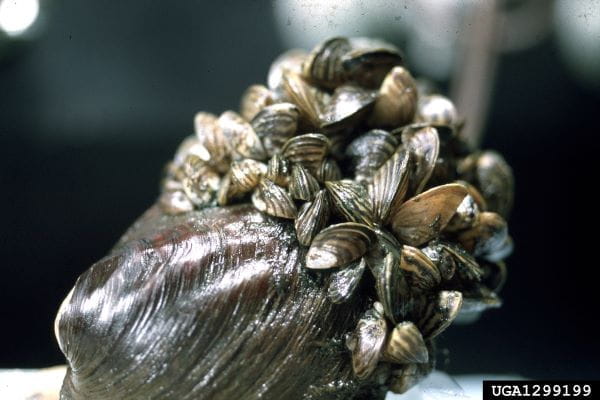
Invasive mussels not only foul docks and boat props and cut your feet, but they also attach to native mussels, preventing movement, feeding and reproduction. In essence, zebra and quagga mussels are smothering Michigan’s native mussels.
“In a Stranglehold: Can We Prevent Invasive Mussels from Muscling in on Native Populations?” (9 a.m. Wednesday, Jan. 14) features Michael Hillary, fisheries biologist for the Michigan Department of Natural Resources. With support from the Great Lakes Restoration Initiative, Hillary is seeking ways to protect the small, fragile populations of our native filter feeders. Join him to discover what he’s learned working with the Michigan Natural Features Inventory to sift through decades of data, locate healthy native mussel populations and field-test management strategies to protect them.
Targeting terrestrial invaders
In 2024, Michigan’s Invasive Species Program began assembling a team to focus on emerging populations of new invasive species and tree diseases on state-managed lands. Today, four foresters and two wildlife biologists have covered a lot of ground detecting and managing watch list and high-priority invasive species on 4.6 million acres of state forests, parks, recreation areas, and game and wildlife areas.
“Habitat Protectors: New Team Targets Invasive Species on State Lands” (9 a.m. Wednesday, Feb. 4) explores their progress. Join Michigan’s Invasive Species Response Team forester Gwen Grochowski and wildlife biologist Natalie Bekins to find out how the team, aided by community science, is protecting critical habitats in your favorite outdoor places.
Tracking plant trends
Not too long ago, collecting field data involved marking paper maps and jotting notes on a clipboard, but technology has rapidly transformed the collection, visualization and analysis of invasive species data.
In “Old Data, New Insights: Tracking Invasive Plant Trends in Michigan’s State Parks” (9 a.m. Wednesday, March 25), Mike Hindy, Greg Norwood and Emily Leslie will share how the DNR Parks and Recreation Division is translating legacy point data collections to uncover trends in invasive species management across Michigan’s state parks. Are the infestations increasing, decreasing or remaining unchanged? Find out when you join them to learn about the challenges, considerations and future directions of GIS in invasive species management.
If you missed any sessions in 2025, recorded versions of all previous webinars are available on the NotMISpecies webpage.
Michigan’s Invasive Species Program, a collaborative effort of the departments of Natural Resources; Environment, Great Lakes, and Energy; and Agriculture and Rural Development, coordinates and supports invasive species initiatives across the state and provides support through the Michigan Invasive Species Grant Program.