The two major classes of Firefighting Foam: Class A and Class B. Some fire stations may have only Class A foam, some fire stations may have both Class A and Class B foam.
Class A foam
Class A foam is used to extinguish Class A materials, such as wood, paper, brush and vegetation (wildland), is widely used by many fire departments for structural firefighting using compressed air foam systems.
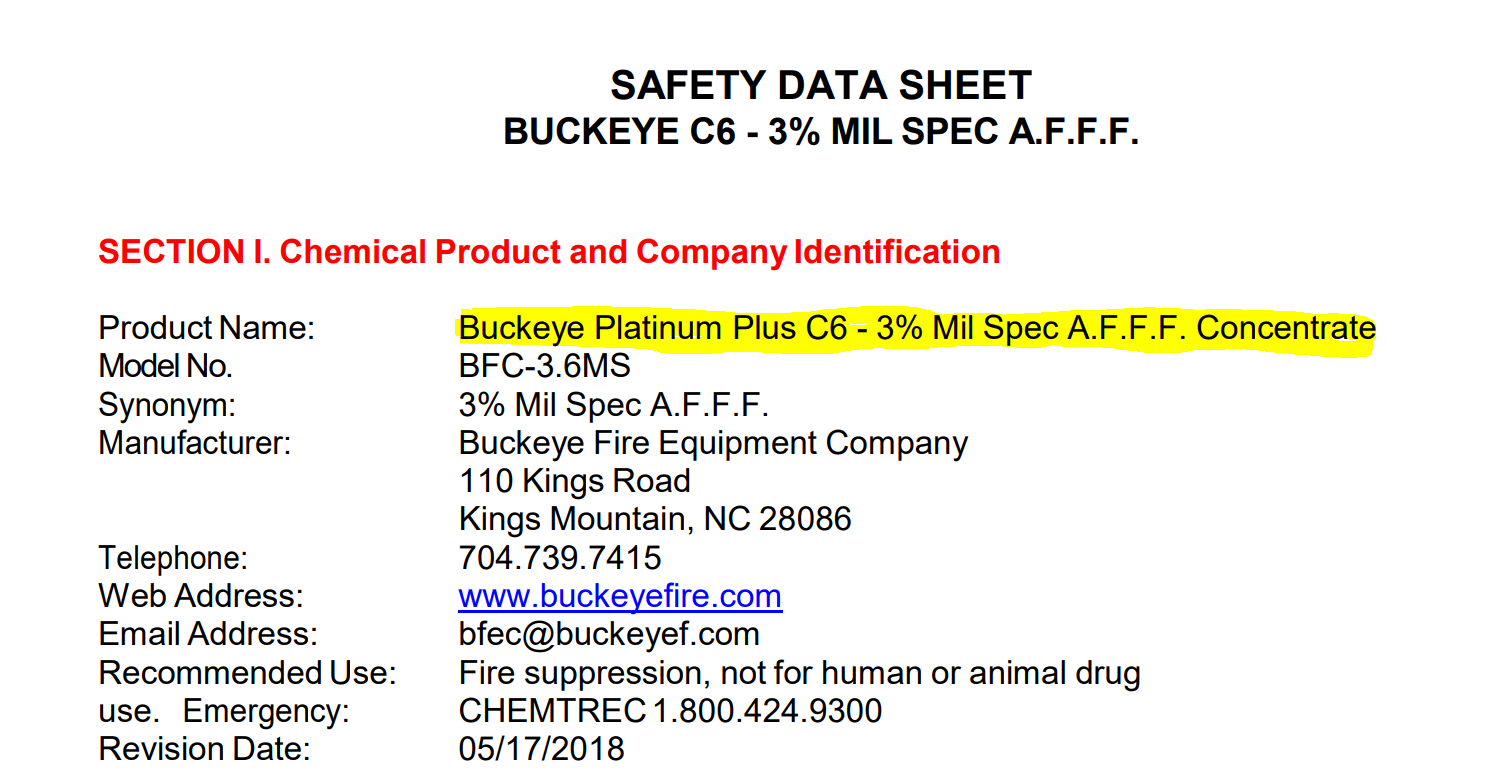
Class B foam (also called 'aqueous film forming foam', or AFFF)
Class B foam is used to extinguish Class B materials, which include gasoline, oil, and jet fuel.
Aqueous film forming foam (AFFF, or alcohol resistant AR-AFFF) is a highly effective foam used for fighting high-hazard flammable liquid fires. AFFF is usually created by combining foaming agents with fluorinated surfactants. Per- and polyfluoroalkyl substances (PFAS) are the active ingredient in these fluorinated surfactants.
When mixed with water and discharged, the foam forms an aqueous film that quickly cuts off the oxygen to the fire, cools it, extinguishes the fire, and prevents the fire from relighting. (Think fire triangle: oxygen, fuel, heat.)