Photos available for media use
Statewide Leaders Gather in Lansing to Advance Strategies in Response to Governor Whitmer’s Executive Directive to Expand Opportunity for Men
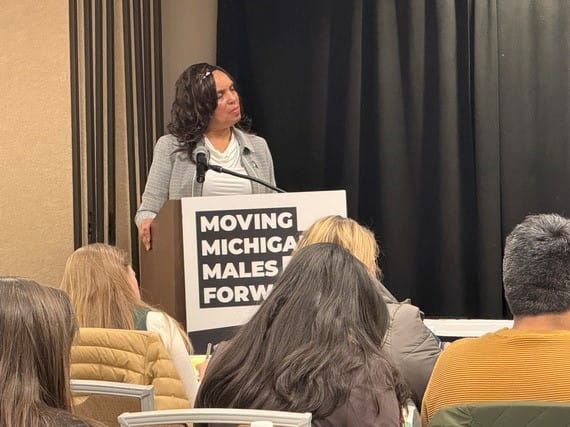
Dr. Beverly Walker-Griffea, MiLEAP director
LANSING, Mich. – The Michigan Department of Lifelong Education, Advancement, and Potential (MiLEAP) hosted its first Moving Michigan Males Forward Convening today, bringing together state, business, education, workforce leaders, and philanthropic organizations to address the urgent challenges facing men across the state. The convening is part of MiLEAP’s response to Gov. Gretchen Whitmer’s Executive Directive to increase outreach to Michigan men and expand access to tuition-free pathways to earn a skill certificate or degree leading to high-wage careers.
“Governor Whitmer’s directive makes clear that Michigan’s long-term success depends on our ability to fully engage men in education and career opportunities,” said Dr. Beverly Walker-Griffea, director of MiLEAP. “Today’s convening represents an important step in ensuring every Michigander has a clear, supported pathway to tuition-free credentials and high-wage jobs. Bringing together leaders from across the state gives us a real opportunity to listen, learn, and lift up strategies that ensure every Michigan man has the support he needs to thrive.”
Throughout the day, attendees explored evidence-based strategies to improve male participation and persistence in education and training programs, with keynote remarks from Richard V. Reeves, founding president of the American Institute for Boys and Men (AIBM) and a national leader in evidence-based research on the challenges facing boys and men.
“Engaging more boys and young men in high quality education is now one of our most pressing policy challenges,” said Richard V. Reeves, president of AIBM. “We need to lift up both women and men together; nobody wins if either group is struggling. It’s wonderful to see Michigan leading on this issue with such intentionality and seriousness.”
Attendees also had the opportunity to engage in panel discussions led by leaders from higher education, workforce development, state government, small business, youth development, and industry. Panel discussions centered on redefining traditional male postsecondary engagement, highlighting strategies such as dual enrollment, apprenticeships, community college pathways, and state-led initiatives that help men overcome barriers to education and credential completion. Panelists also examined Michigan’s evolving labor market and shared how emerging industries, stronger employer-education partnerships, and expanded avenues for entrepreneurship can open new doors for men to succeed in high-demand fields.
As the state works to expand access to postsecondary education and training pathways, programs like Michigan Reconnect and the Michigan Achievement Scholarship, and Community College Guarantee are already lowering costs for hundreds of thousands of students to obtain a degree or skills certificate. Yet, men continue to be underrepresented in these opportunities. In Reconnect, for example, women outnumber men two to one in enrollment – reflecting a broader national trend in which women continue to outnumber men at community colleges and universities across the country.
Increasing male participation in these proven pathways is central to meeting the state’s Sixty by 30 goal and ensure Michigan’s workforce remains strong and competitive. To support this work, Gov. Whitmer’s Executive Directive instructs both MiLEAP and the Michigan Department of Labor and Economic Opportunity (LEO) to expand outreach so more men can access existing tuition-free education and workforce training opportunities.
“Moving Males Forward is critical to strengthening Michigan’s workforce and our economy,” said Susan Corbin, director of LEO. “We are working hard to ensure all Michiganders have an equal opportunity for prosperity, however, not all are taking advantage of these opportunities. We’re committed to removing barriers and opening the doors to education, credentials and real career pathways that strengthen Michigan’s communities and economy.”
“Michigan’s long-term prosperity depends on every resident having a clear path to opportunity, and that includes making sure men are fully engaged in education, training, and entrepreneurship,” said Brian Calley, president & CEO of the Small Business Administration of Michigan. “The underrepresentation of men in programs like Michigan Reconnect and our community colleges is a challenge we must meet head-on. By removing barriers and building stronger on-ramps for men—alongside the progress women continue to make—we will hit our Sixty by 30 goal, grow more small businesses, create good jobs, and build the competitive workforce Michigan needs.”
“Detroit Promise is committed to building authentic pathways and supports that reflect the lived realities of Detroit’s young people,” said Onjila Odenaal, CEO of Detroit Promise. “For our young men, opportunity must be paired with intentional engagement, meaningful supports, and the resources needed to navigate each stage of their journey. They deserve supports that see them, honor their talents and needs, and help them see themselves in spaces where they can truly thrive. Convenings like Moving Michigan Males Forward underscore that when we invest in targeted, meaningful strategies and the right resources for young men, their success strengthens families, neighborhoods, and the future of Detroit.”
“Employers across Michigan are facing unprecedented challenges finding the talent they need, especially as fewer young men pursue education or training after high school,” said Kevin Stotts, president at TalentFirst. “In West Michigan, we’ve seen the power of bringing educators and employers together to highlight good-paying jobs and clear career pathways that too often go unnoticed. We cannot afford to overlook this talent. Supporting more men in accessing these opportunities is essential—not just for their future, but for the strength and competitiveness of our entire state.”
MiLEAP remains committed to working with partners across Michigan to expand access, remove barriers, and strengthen the educational and economic pathways available to all Michiganders.
To learn more about MiLEAP’s initiatives and ongoing efforts, visit Michigan.gov/MiLEAP.
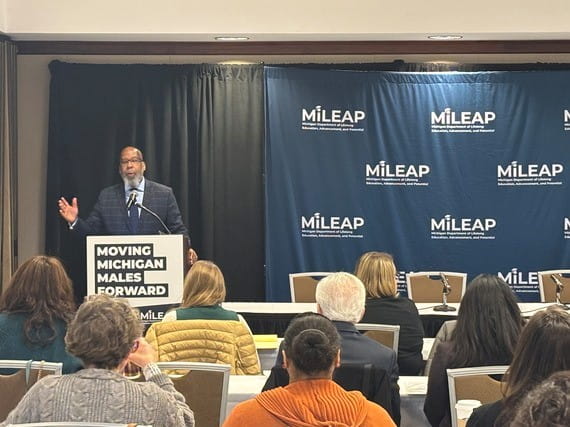
Jason Wilson, deputy director of MiLEAP's Office of Strategic Talent Preparation
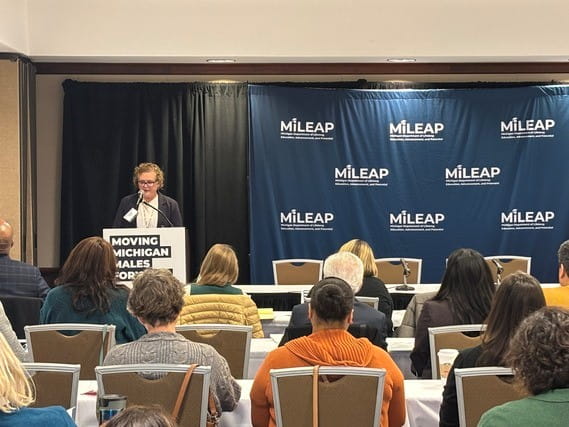
Susan Corbin, LEO director
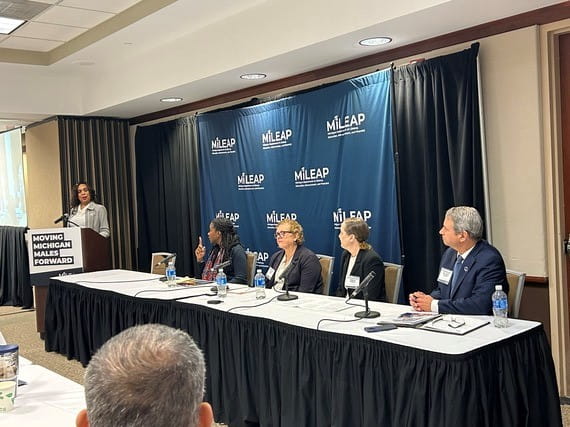
Left to right: Dr. Beverly Walker Griffea, MiLEAP director; Onjila Odeneal, CEO of Detroit Promise; Susan Corbin, LEO director, Krista Johnson, director of Workforce Development at LEO; and Dr. Steve Robinson, LCC president
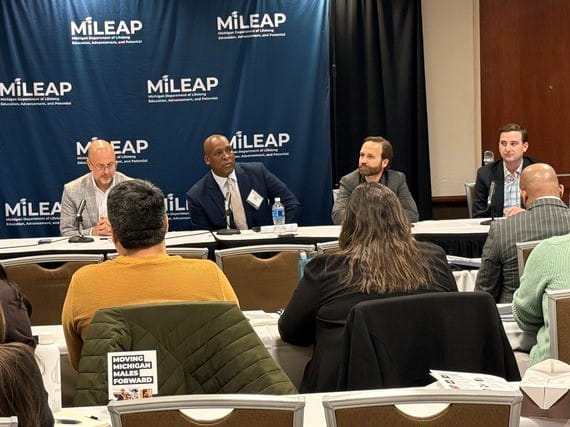
Left to right: Kevin Stotts, President of TalentFirst; Fred Hunter, CEO of Detroit PAL; Brian Calley, SBAM president; and Charlie Tyson, Technology Activation Director of Michigan's OFME
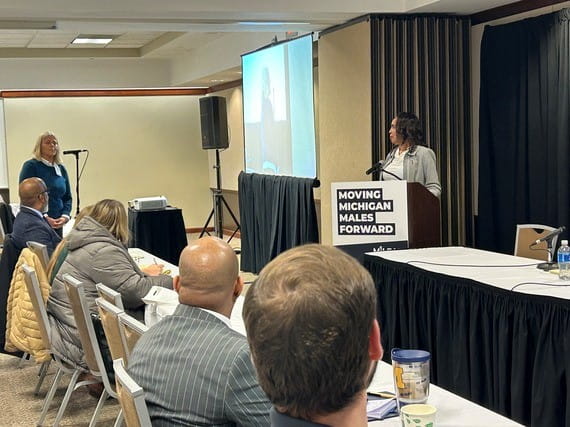
Attendee asks questions to the panel.
###
About MiLEAP:
Established by Governor Whitmer in 2023, MiLEAP’s mission is to improve outcomes from preschool to postsecondary so anyone can ‘make it in Michigan’ with a solid education and a path to a good-paying job. To learn more about MiLEAP, go to Michigan.gov/MiLEAP.