Photos available for media use
Leaders gather at Eastern Michigan University to strengthen collaboration and shape strategies that increase male participation in education and training
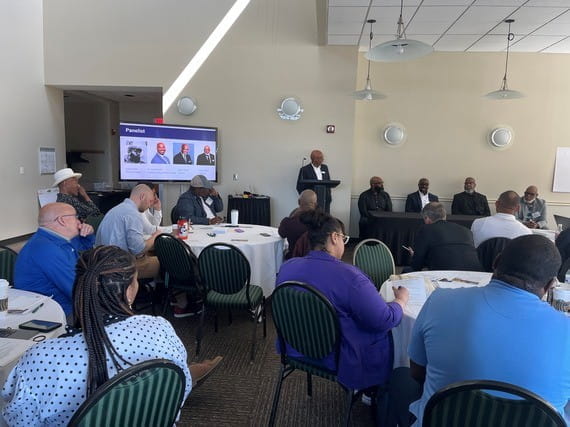
Panelists participate in a discussion during the Men in Motion Summit at Eastern Michigan University on May 29, 2026. The summit brought together education, workforce, community, and state leaders to explore strategies for increasing postsecondary attainment and career success among Michigan men.
LANSING, Mich. – As Michigan continues efforts to increase participation in postsecondary attainment and career readiness among men, state, education, talent, and community leaders gathered at Eastern Michigan University today to convene around solutions to strengthen male engagement and success statewide.
The Men in Motion Summit, hosted by the Michigan Department of Lifelong Education, Advancement, and Potential (MiLEAP), in partnership with the Michigan College Access Network (MCAN) and the Detroit Parent Network (DPN), brought together organizations and partners from across Michigan to share insights, identify barriers, and explore collaborative strategies that help more men pursue education and training opportunities – particularly men of color, rural men, and adult learners ages 25 and older.
“When we create stronger pathways into education and training for men and boys, we strengthen families, communities, and our state’s future workforce,” said Dr. Beverly Walker-Griffea, director of MiLEAP. “This summit is a continuation of our work to bring partners together to better understand the unique barriers men face in every corner of our state and identify solutions that help more Michiganders reach their goals.”
The summit focused on building a shared vision for increasing access, participation, and success in postsecondary education and workforce training programs. As part of the days collaborative work, participants engaged in a trend mapping exercise designed to identify trends affecting men and education in Michigan. The activity explored emerging needs, future challenges, and factors influencing postsecondary attainment and economic mobility for men. Insights from the exercise will help guide a collective strategy to improve long-term outcomes.
Attendees also participated in a panel discussion centered on enrollment trends, barriers to access, and strategies to better support men pursuing education and training opportunities with perspectives from higher education, state government, youth services, and K-12 support systems.
“At MCAN, we know that improving educational and career outcomes for men and boys requires intentional collaboration, honest conversation, and a shared commitment to opportunity,” said Ryan Fewins-Bliss, executive director of MCAN. “This event is about bringing together organizations and community leaders who are already doing important work to better understand what’s working, where gaps remain, and how we can build stronger pathways to postsecondary success for young men across Michigan. Certificates and degrees remain critical to long-term economic mobility, and we must ensure that no Michigander is left behind. We’re proud to partner with MiLEAP and Detroit Parent Network on this effort and to help answer Governor Whitmer’s call to expand access to skills training and higher education for young men throughout our state in pursuit of the Sixty by 30 goal.”
The discussions also highlighted the importance of existing state programs that are helping increase access to education and training for Michiganders.
Programs like Michigan Reconnect continue to play a key role in helping adults pursue tuition-free pathways to earn an associate degree or skills certificate at their in-district community college. Since launching, Reconnect has supported more than 94,000 Michiganders in taking the next step toward credentials and degrees that lead to better-paying jobs and long-term economic mobility. Michigan also continues to support students through the Michigan Achievement Scholarship and Community College Guarantee, which have lowered or eliminated the cost of college and skills training for more than 110,000 recent high school graduates since 2023.
While these programs are helping drive record growth in postsecondary access statewide, men continue to participate at lower rates than women across many education and training programs.
“Because Michigan’s economic competitiveness, workforce readiness, gender equity, and community stability depend on a well-educated population, addressing post‑secondary attainment for males is critical,” said Calvin Talley, manager of the Career Academy at Goodwill of Greater Detroit. “Women consistently enroll in and complete college at higher rates than men, with about 69% of women enrolling after high school compared to 56% of men. This disparity results in fewer men earning the credentials needed for today’s economy. At the same time, because most good‑paying jobs now require education beyond high school—including 45 of Michigan’s “Hot 50” high-demand occupations—men who don’t pursue postsecondary education face reduced access to stable, well-paying careers. This directly impacts Michigan’s workforce and economy and makes it more difficult to achieve the state’s Sixty by 30 goal.”
Increasing male participation is critical to achieving Michigan’s bipartisan Sixty by 30 goal – which aims to increase the percentage of working-age adults with a postsecondary credential to 60% by 2030 – and ensuring the state’s economy remains strong and competitive. Gov. Gretchen Whitmer’s executive directive has helped drive a broader effort focused on improving outcomes for men and boys and expanding outreach to guide more men toward tuition-free education and workforce training opportunities.
“We know too many men still don’t see themselves reflected in educational and career spaces or fully understand the options available to them,” said Jason Wilson, deputy director of MiLEAP’s Office of Strategic Talent Preparation. “Today’s summit reflects the growing momentum throughout our state to change that by building stronger connections, increasing awareness, and ensuring more men have the support and resources they need to succeed.”
The Men in Motion Summit follows other statewide efforts focused on improving outcomes for men and boys, including last year’s Moving Michigan Males Forward Convening and the recent MI Kickoff event at Ford Field. MI Kickoff brought together more than 1,000 young men from across the state who did not yet have a postsecondary plan to explore in-demand fields, bridge their strengths and interests to future opportunities, and identify clear next steps after high school. Together, these efforts are helping build a more coordinated statewide approach to engaging more Michigan men in education, training and career pathways.
“Many of us have been working with boys and men in both community-based and college access organizations for years,” said Christopher Rutherford, director of Education and Advocacy at Detroit Parent Network. “Yet, even with the great efforts by the state, many are still not aware of the unprecedented resources that Governor Whitmer and the legislature have made available. This summit is designed to lift up those opportunities to organizations who work with boys and men every day but may not fully grasp the myriad of resources that can help put our men back on the pathway to economic mobility.”
MiLEAP remains committed to working alongside partners to expand access, remove barriers, and strengthen educational and economic opportunity for all Michiganders.
To learn more about MiLEAP’s initiatives and ongoing work, visit Michigan.gov/MiLEAP.
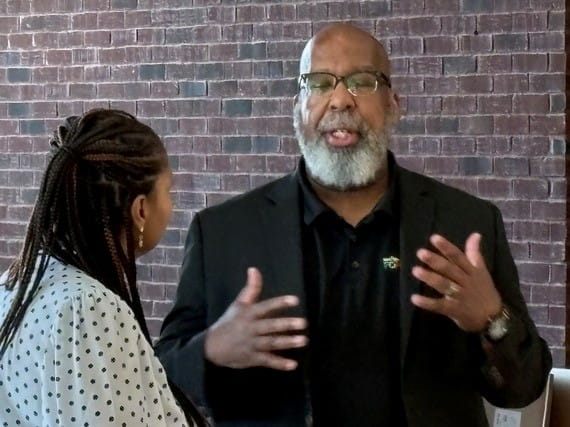
Jason Wilson, deputy director of MiLEAP’s Office of Strategic Talent Preparation, speaks with an attendee during the Men in Motion Summit at Eastern Michigan University on May 29, 2026.
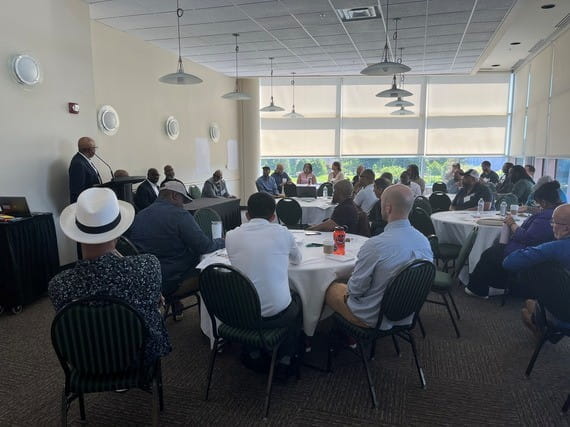
Attendees listen during a panel discussion at the Men in Motion Summit, which convened partners from across Michigan to discuss barriers and opportunities related to education, training, and workforce participation for men and boys.
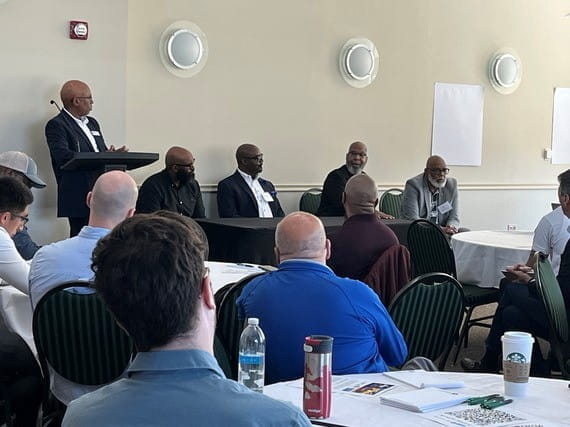
Panelists share perspectives on community engagement, education, workforce development, and economic mobility during the Men in Motion Summit at Eastern Michigan University.
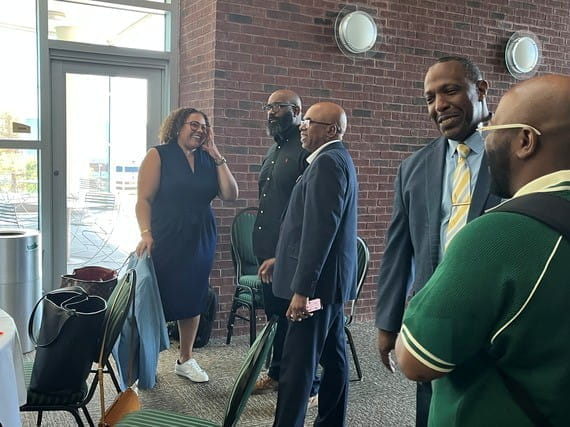
Attendees connect during the Men in Motion Summit, an event designed to strengthen collaboration and expand pathways to education, training, and economic opportunity for Michigan men.
###
About MiLEAP:
Established by Governor Whitmer in 2023, MiLEAP’s mission is to improve outcomes from birth to postsecondary so anyone can ‘make it in Michigan’ with a solid education and a path to a good-paying job. To learn more about MiLEAP, go to Michigan.gov/MiLEAP.
About MCAN:
As the leader in the state’s college access movement, MCAN works to improve the futures of Michigan’s students and communities by making college accessible to all. MCAN’s work centers on one main goal: To increase Michigan’s postsecondary educational attainment rate to 60% by 2030. MCAN engages partners statewide who are committed to systems-level change and the reduction of barriers to increase college readiness, participation and completion rates, particularly among low-income students, first-generation college-going students, and students of color. MCAN has helped Michigan’s postsecondary attainment rate increase for the 10th consecutive year. For more information, visit MiCollegeAccess.org.
About DPN:
Detroit Parent Network (DPN) is a network of parents working to build and engage parents and others to ensure every child has a champion. Parents are the driving force ensuring conditions exist for Metro-Detroit children to thrive. Detroit Parent Network is organized around core values: resourceful, empathetic, dedicated and empowering. For more information, visit DetroitParentNetwork.com.