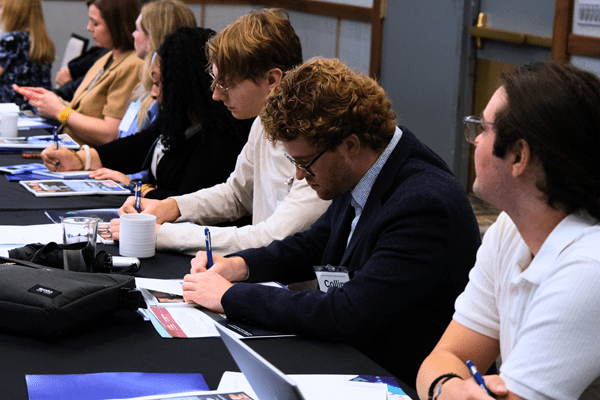
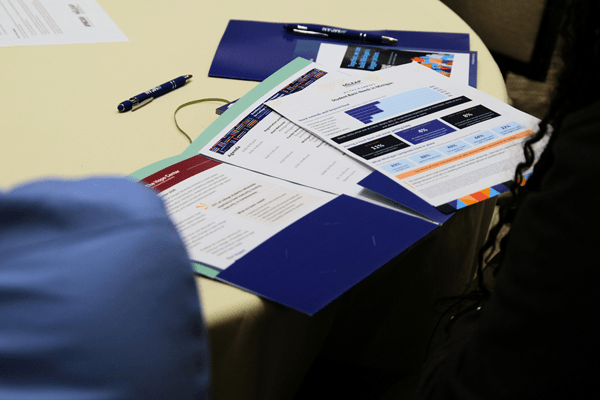
Photos available for media use.
MiLEAP and MCAN bring together education, government and community leaders to build on 12 recommendations from MiLEAP’s Student Basic Needs Task Force
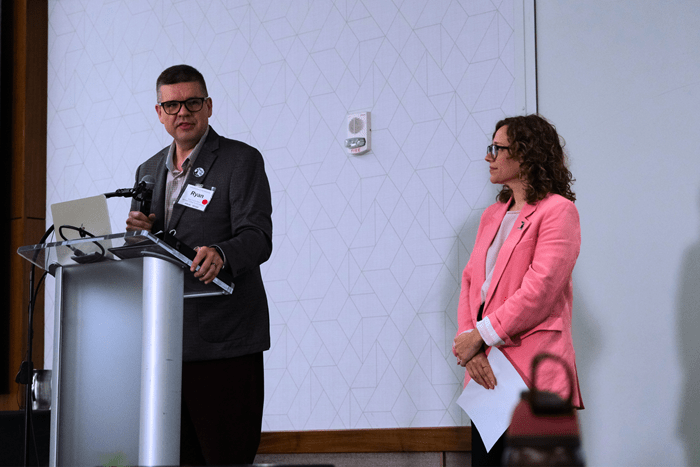
LANSING, Mich. – The Michigan Department of Lifelong Education, Advancement, and Potential (MiLEAP) today advanced its statewide effort to address college student basic needs by convening government, higher education and community leaders through Braiding Community Support for College Student Basic Needs, hosted in partnership with the Michigan College Access Network (MCAN).
The convening builds on MiLEAP’s Student Basic Needs Task Force, launched in 2024 to identify ways to reduce basic needs insecurity as a barrier to postsecondary success. The Task Force’s report, Barriers to Bridges: Strengthening Michigan Communities by Addressing College Student Basic Needs, outlines 12 priority recommendations focused on improving access to existing resources, strengthening student supports, creating new resources and improving the availability of student basic needs data.
“Michigan has made significant progress in expanding access to postsecondary education, but getting students through the door is only part of the equation,” said Sarah Szurpicki, deputy director of MiLEAP’s Office of Higher Education (OHE). “Students also need the resources and support to persist, complete their education and reach their goals. This convening brought partners together to build on the recommendations of the Basic Needs Task Force and identify ways we can work across sectors to better support Michigan students.”
Basic needs insecurity can create significant barriers for students pursuing a college degree or skill certificate, particularly when students face multiple needs at the same time. The latest representative data available show that 20% of Michigan undergraduates experienced low or very low food security and 7% experiences homelessness in the previous 30 days. Other data suggests that as many as 44% of Michigan college students experience housing insecurity. Among students experiencing food insecurity, only 11% accessed food benefits, highlighting gaps between students’ needs and the resources available to support them.
“Addressing student basic needs is vital to meeting our Sixty by 30 attainment goal. If we want more Michigan students to earn a postsecondary degree or certificate, we have to come together around the whole student and recognize that challenges like housing, food, transportation, child care and mental health can stand between a student and their diploma,” said Ryan Fewins-Bliss, executive director of MCAN. “We know there are resources out there to help students meet these needs. The goal of this work is to connect the people and organizations already working in communities across the state to create a comprehensive, braided support system that is easy for students to access, keeping them on track for graduation and brighter futures. That kind of collaboration is essential to building a Michigan where all students—especially students from low-income backgrounds, students who would be the first in their family to graduate college, and students of color—have the opportunity to earn a postsecondary credential and reach their full potential.”
Addressing these barriers is part of Michigan’s broader effort to increase postsecondary attainment and ensure students have the support to reach their full potential.
“Michigan has done the critical work of identifying the barriers students face and developing a clear set of policy recommendations,” said Dr. Sara Abelson, assistant professor at Temple University School of Medicine and senior director of education and training at the Hope Center for Student Basic Needs. “The next step is turning those recommendations into action—translating data and student experiences into coordinated policies, agency and institutional practices, and community partnerships. The Hope Center is proud to work alongside Michigan leaders as they build an implementation roadmap that strengthens basic needs supports and helps more students complete their education and thrive.”
The convening was supported by the Urban Institute through the College Student Basic Needs Network—Great Lakes, an initiative funded by the ECMC Foundation, Kresge Foundation and the Joyce Foundation.
“Michigan has been a national leader by convening a cross-sector task force to develop 12 priority recommendations for meeting college students’ basic needs challenges—including housing, food, transportation, childcare, and technology,” said Theresa Anderson, senior fellow at the Urban Institute. “Pursuing those recommendations through sustained collaboration across state agencies, institutions, and community partners is how the state can make progress toward its goal that 60% of adults hold a postsecondary credential by 2030.”
Throughout the convening, participants explored strategies for strengthening student support systems. CivicLab led a systems-level session focused on Michigan’s basic needs landscape, while higher education and community leaders shared approaches for centralizing basic needs support on campuses and strengthening partnerships among colleges, community organizations and regional partners.
MiLEAP will continue working with higher education institutions, state agencies and community partners to advance policies that strengthen basic needs supports and help more Michigan students persist and complete their postsecondary education.
The Barriers to Bridges: Strengthening Michigan Communities by Addressing College Student Basic Needs report and additional resources are available through MiLEAP’s Student Basic Needs webpage.
###
About MiLEAP:
Established by Gov. Whitmer in 2023, MiLEAP ensures every Michigander has a path to prosperity from birth to earning a postsecondary credential that leads to high-wage careers. To learn more about MiLEAP, go to Michigan.gov/MiLEAP.
About Michigan College Access Network (MCAN)
Since our founding in 2010, Michigan College Access Network has engaged with partners across the state to improve college access and success for all students. Our data-driven approach is focused on providing support where it is needed the most, particularly among students from low-income backgrounds, students who would be the first in their family to graduate college, and students of color. We believe in the power of higher education to improve individual lives, with positive effects that ripple out into their communities. We are committed to Michigan’s Sixty by 30 attainment goal — 60% of residents earning a postsecondary certificate or degree by the year 2030 — in pursuit of a better future for all Michiganders. For more information, visit micollegeaccess.org.