MDE, MiLEAP highlight continued support for educator training and professional learning as Literacy Essentials remains a cornerstone of Every Child Reads initiative
LANSING, Mich. – As Michigan marks the 10th anniversary of Literacy Essentials, the Michigan Departments of Education (MDE) and Lifelong Education, Advancement, and Potential (MiLEAP) are highlighting the research-based framework’s role in strengthening literacy instruction and the state’s continued investment in the professional learning and educator support needed to improve literacy outcomes for children across Michigan.
The bipartisan Fiscal Year 2027 (FY27) budget, approved by the Legislature and signed by Governor Gretchen Whitmer in July, includes continued funding to support the implementation of Literacy Essentials through statewide professional learning, coaching, and educator training. The investment reflects Michigan's ongoing commitment to evidence-based literacy instruction as part of the state’s broader Every Child Reads initiative and complements additional investments in PreK for All, child care scholarships, and other early learning programs that help children develop strong language and literacy skills before kindergarten.
“Strong literacy skills open the door to lifelong learning, opportunity and success,” said Dr. Beverly Walker-Griffea, executive director of MiLEAP. "While Michigan continues to face challenges in improving literacy outcomes, we know that investing in research-based practices and supporting educators during the earliest years of development remains critical. The continued investment in Literacy Essentials reflects our commitment to giving educators the tools they need to help every child become a confident reader.”
Developed in 2016 by the Michigan Association of Intermediate School Administrators (MAISA) General Education Leadership Network (GELN) in partnership with educators, researchers, and MDE, the Literacy Essentials provide research-based instructional practices grounded in the science of reading to support literacy development from birth and beyond. Best practices include phonemic awareness, vocabulary development, interactive read-alouds, writing instruction, differentiated small-group learning, and strong family engagement.
The framework was intentionally designed to complement existing curricula and instruction tools used in classrooms and child care settings. A recent report from Michigan State University’s Education Policy Innovation Collaborative (EPIC) found that literacy coaching helps strengthen classroom instruction, reinforcing the importance of supporting educators with proven practices and professional learning.
New evaluation findings from Oakland University further demonstrate the impact of the Literacy Essentials professional learning model. Researchers found that educators who participated in Literacy Essentials training reported stronger knowledge of evidence-based literacy practices and greater confidence in helping others implement them. The evaluation also found improvements in classroom language and literacy environments and strong use of coaching strategies that support teacher growth.
“The instructional practices are not meant to be a curriculum or a program,” said Tonya Harrison, director of curriculum and instruction for MAISA. “They are a foundational blueprint that teachers can use alongside the curriculum and instructional tools already being used in their child care businesses and schools.”
The Oakland University findings, which included feedback from 839 participants from across Michigan between 2018 and 2025, reinforce an important lesson: Literacy Essentials is most effective when educators have access to high-quality professional learning, coaching, and ongoing support.
The FY27 budget’s continued investment in Literacy Essentials helps ensure those opportunities remain available for educators across the state.
"Research-based instructional practices only make a difference when educators have the training and support needed to implement them effectively," said Synthia Britton, MiLEAP interim deputy director overseeing the Office of Early Education. "The evaluation results show that Literacy Essentials is helping educators strengthen their practice, and the continued investment in this work allows us to expand opportunities for teachers, child care professionals, coaches, and administrators across Michigan as we work to accelerate literacy gains for children."
Literacy Essentials is one component of the Every Child Reads initiative, a statewide effort to help more children become proficient readers through evidence-based instruction, educator training, expanded early learning opportunities, and targeted support for students who need it. Michigan's literacy strategy also includes investments in PreK for All, the child care scholarship program, MI Tri-Share, helping expand access to high-quality early learning environments where children build language, communication, and early literacy skills before entering kindergarten.
Recently, Gov. Gretchen Whitmer signed an executive order creating the Every Child Reads Champions Council, a new statewide council that brings together leaders from education, business, philanthropy, nonprofit organizations, Tribal communities, and government to help strengthen Michigan’s literacy agenda. The Council is charged with championing the Every Child Reads vision, engaging leaders and experts to identify effective practices, and helping guide the state’s ongoing implementation and measurement of its literacy strategy.
The Champions Council, housed within MiLEAP, held its first meeting Tuesday, Oct. 6, bringing members together to begin its work and establish a path forward for supporting Michigan’s literacy goals. The Council will continue working with MiLEAP and MDE to identify opportunities to build on progress, address challenges and help ensure Michigan’s literacy efforts remain focused on what works for children, educators, and communities.
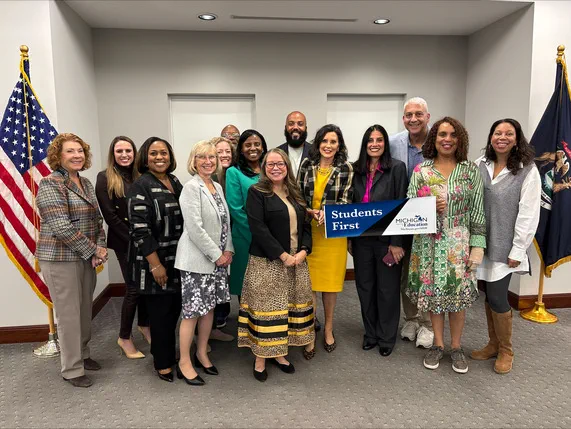
“Improving literacy outcomes will take all of us working together with a shared focus on what research tells us works for students,” said Maysam Alie-Bazzi, chief deputy superintendent for the Michigan Department of Education, who attended the Champions Council meeting. “The Every Child Reads Champions Council brings together leaders and experts from across Michigan to help strengthen that work, while investments in evidence-based professional learning give educators the knowledge and skills they need to put proven practices into action. MDE is proud to partner with MiLEAP and educators across the state as we put Students First by working to ensure every Michigan student has the opportunity to become a strong reader.”
Hundreds of early educators have participated in the Literacy Essentials training this year through MiLEAP and MAISA-supported Literacy Day of Learning events and related trainings, helping expand the use of research-based literacy practices in classrooms and child care settings across Michigan.
“The training gave me a whole new mindset,” said Andrea Nedeau, lead teacher and assistant director at Mid Peninsula School Child Care in Rock, Michigan. “I came back excited to implement what I learned right away, and I was surprised by how quickly I started seeing changes in the classroom through simple shifts, such as making books more accessible and interactive and using more developmentally appropriate examples.”
“In our classroom, literacy is part of everything we do,” said Carolyn Pomeroy, PreK for All teacher and Literacy Essentials trainer at the Michigan State University Child Development Laboratories in East Lansing, “If children are building a racetrack in the block area or playing restaurant in the pretend kitchen, we encourage them to create signs or menus. Suddenly they’re sounding out words, writing labels, and communicating with each other because it supports the play they’re already excited about.”
Parents are also seeing the impact firsthand.
“Writing his name was initially very frustrating for him,” said East Lansing parent Stirling Korte-Murdoch about her son, Winston, 5. “Then one day he wrote it independently, and something clicked. He was so proud of himself. Now he wants to write his name on everything.”
“My three-year-old daughter, Avery, is forming better sentences and using the right words more often,” said Upper Peninsula, Gladstone parent, Kylie O’Neal. “Instead of just saying something simple like ‘pick up toys,’ she’ll now say, ‘We need to pick up all the toys before the dog comes out.’ You can tell she’s learning something new all the time.”
The Oakland University evaluation also identified ongoing challenges facing educators, including time constraints, teacher turnover, mental health concerns, classroom behavior challenges, funding disparities, and the need for continued statewide alignment and guidance. State leaders say those findings underscore the importance of sustained investments in educator training, coaching, and support systems.
As Michigan continues advancing Every Child Reads, MDE and MiLEAP say the FY27 budget’s continued support for Literacy Essentials will help ensure educators across the state have access to the evidence-based tools and professional learning needed to build strong literacy foundations for every child.
For more information about upcoming Literacy Day of Learning events or regional opportunities, individuals are encouraged to contact their local MiFamily Engagement Center.
###
About MiLEAP:
Established by Gov. Whitmer in 2023, MiLEAP ensures every Michigander has a path to prosperity from birth to earning a postsecondary credential that leads to high-wage careers. To learn more about MiLEAP, go to Michigan.gov/MiLEAP.