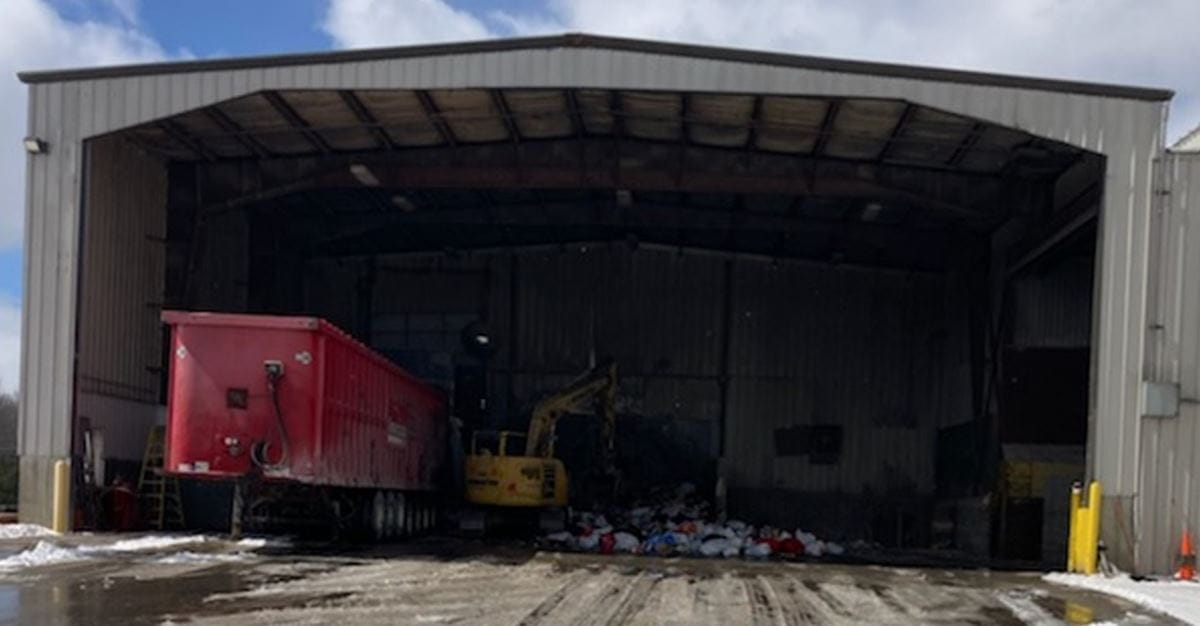
There are four basic requirements that solid waste haulers must meet under air and waste materials management regulations implemented by EGLE. These regulations are found under Parts 55 and 115 of Michigan’s Natural Resources and Environmental Protection Act (NREPA), and the Part 55 and 115 Rules.
1. Don't take banned waste to a solid waste landfill for disposal.
Solid waste haulers are required to annually notify their customers about what wastes are banned from landfill disposal. Solid waste haulers can use EGLE’s Landfill Prohibited Materials and Special Waste Guide to help educate customers, find more online resources on banned materials, and to connect with appropriate state and federal agencies overseeing implementation of the regulations for handling materials banned from landfill disposal in Michigan.
For options for handling banned materials, contact the recycling or disposal facilities in the local area for information about what materials they will and will not accept, including any special handling requirements established for safe management of the material. A disposal facility is not required to accept everything the regulations allow. Many disposal facilities prohibit disposal of materials they could accept under the law, to ensure the safety of their staff and to limit long-term operating liabilities. Some facilities offer programs to divert unwanted materials to environmentally preferred management methods. To learn more about diverted waste and their handling requirements, see Chapter 2, Section 2.1.2h, of the Michigan’s Guide to Environmental, Health, and Safety Regulations. For additional options for disposal of household hazardous waste, see the EGLE Household Hazardous Waste Website at Michigan.gov/EGLEHHW.
2. Meet the transporting unit requirements.
The Part 115, Part 6 solid waste rules include requirements for transporting units used to haul solid waste. The Part 6 rules require:
- A unit design that prevents any of the waste from being spilled. All openings must be closed and doors or covers must be secured by an adequate latch or restraining mechanism to keep them closed while transporting solid waste which may blow or fall off the vehicle. The driver is responsible for using and properly positioning covers to prevent the waste from blowing or falling out of the vehicle. The driver is responsible for having covers that don’t rip, shred, or break easily under normal use. A special cover is required if there is a need to control odors, vermin, liquids, dust, or smoke.
- Unit repair if the transporting unit doesn’t meet the unit design requirements. If a unit is not repaired, it must be taken out of service.
- Unit cleaning regularly to reduce odors, prevent the attraction of vermin, and prevent nuisance conditions. Cleaning wash waters must be managed as a liquid industrial by-product unless they can be directly discharged to a municipal wastewater treatment plant (WWTP) having granted approval for disposal of the wash waters. Any accumulation of the wastewater prior to discharge to the WWTP needs to meet the liquid industrial by-product generator requirements as well. For more information on managing wash waters, contact your local District Office’s liquid industrial by-products inspector.
- Unit loading in a manner that minimizes any of the waste being spilled. Any spillage of the waste must be picked up as soon as possible and the area properly cleaned.
- Unit parking to be at least 500 feet away from any residences. The unit cannot be parked or stored anywhere it could cause a health hazard or nuisance in a residentially zoned area.
- Purposeful dumping from the unit due to a hot load or fire, must be immediately extinguished by the most effective means and the area properly cleaned as soon as reasonably possible.
3. Take the solid waste to a legitimate recycling facility, licensed solid waste landfill, licensed or exempt transfer station, or a permitted (and licensed, where applicable) incinerator.
Contact the disposal or recycling facility for their specific requirements. If you are taking solid waste out of the county where the waste was generated and into another Michigan county for handling, it must be allowed under both the generating and receiving county’s Solid Waste Management Plan. See the EGLE Solid Waste Planning Website. County solid waste planning details are found under the headings “Import/Export Authorizations” and “Currently Approved County Plans and Plan Amendments.” After reviewing online planning details, verify the handling and disposal options by contacting the county designated planning agent. A map of solid waste facilities actively accepting solid waste for disposal is also available to find disposal options. The Waste Data System is available online at https://www.egle.state.mi.us/wdspi/Home.aspx and can be searched to locate solid waste landfills, transfer stations, and processing plants.
There are two "Types" of solid waste landfills:
- Type II landfills which are authorized to accept municipal solid waste.
- Type III landfills which are authorized to accept non-hazardous construction, demolition, and industrial waste.
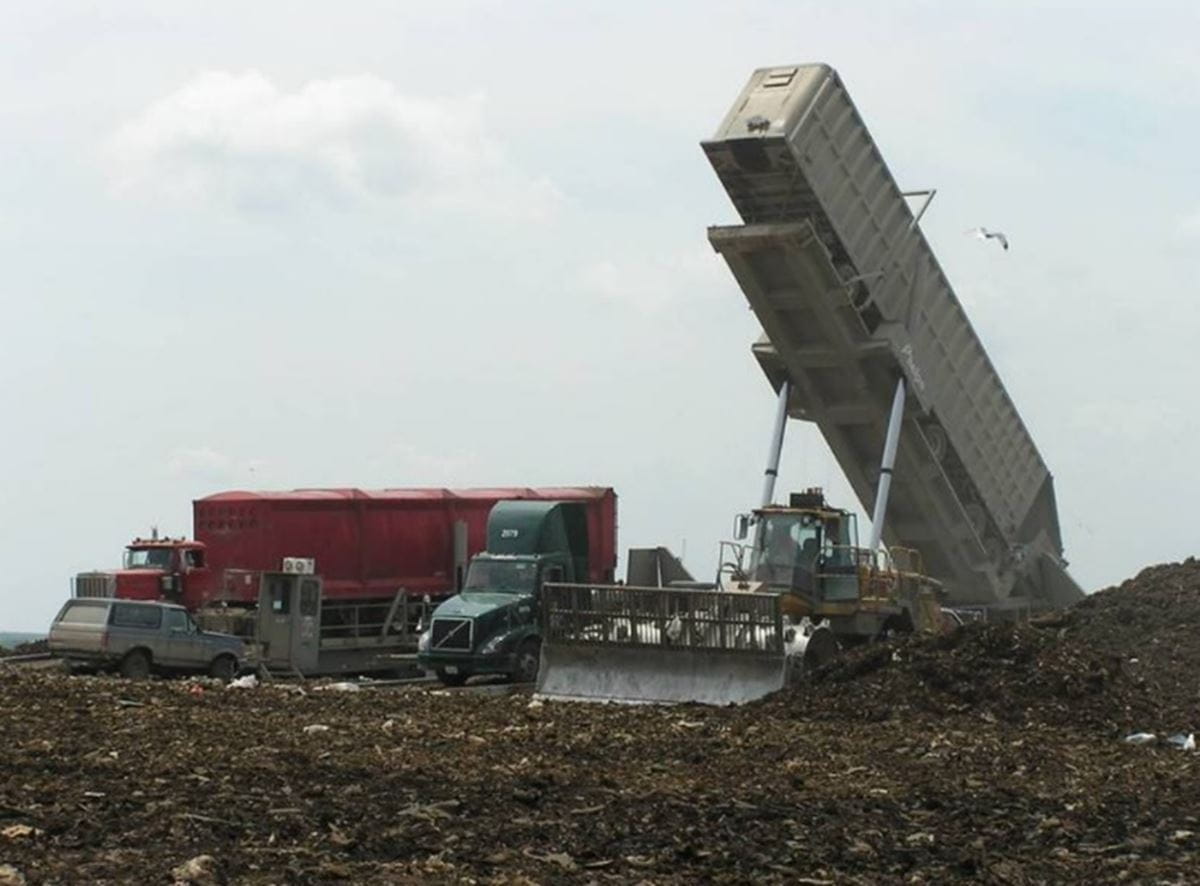
Transporters of recyclables can find a list of commercial recyclers that have notified EGLE in the Recycled Materials Market Directory available online at Michigan.gov/RMMD. Michigan has one commercially available municipal solid waste incinerator, the Kent County Resource Recovery facility located in Grand Rapids.
Pick up of used appliances that contain refrigerants (e.g., Freon®, chlorofluorocarbons (CFCs), hydrochlorofluorocarbons, etc.) must have refrigerants removed. Check if the disposal company or recycler will accept appliances that contain refrigerants and find out their site-specific procedures to ensure the refrigerants are properly removed and recycled, prior to recycling the item for other commodities. The Environmental Protection Agency (EPA) oversees the regulations that require refrigerants to be properly removed before being recycled for scrap metal or being disposed in a landfill. A certified technician must remove, recover, and recycle the refrigerants under the federal regulations enforced by EPA. See the EPA information about Complying With The Section 608 Refrigerant Recycling Rule and contact EPA at spdcomment@epa.gov with questions requesting a call back, if desired.
If more than ten scrap tires will be picked-up, a scrap tire hauler registration is required and the tires must be taken to a registered location designated on a scrap tire manifest. Contact the District Office scrap tire inspectors with any questions about hauling scrap tires. For more information on scrap tire regulations see the Scrap Tire Website at Michigan.gov/ScrapTires.
If servicing residential customers, especially when offering one time cleanout services, be aware there are times when customers have household hazardous waste that they want removed. Before taking it, contact the disposal facility where you haul the waste to determine if you can take that type of waste to them. Encourage the customers to contact their local household hazardous waste collection programs for local disposal options. If the area does not have a local collection program, some information about finding other disposal options and alternatives to these products can be found on the Household Hazardous Waste Website for Environmental Professionals.
4. If hauling waste into the state, meet the additional import requirements.
See the information and forms posted at Michigan.gov/EGLEWaste after selecting “Solid Waste,” “General Information,” and “Landfill Prohibited Materials and Appropriate Waste Disposal Options.“ Discuss solid waste import questions with the District Office solid waste inspectors.