The Michigan Department of Environment, Great Lakes, and Energy (EGLE) has received funding through the Methane Emissions Reduction Program (MERP), under the Inflation Reduction Act (IRA), for mitigating emissions from Marginal Conventional Wells (MCWs). A Marginal Conventional Well is defined as a conventional oil and/or gas well that produces less than 15 barrels of oil equivalent (BOE, i.e. 15bbl/day oil or 90,000 cubic feet (90 mcf) of gas/day or combination thereof).
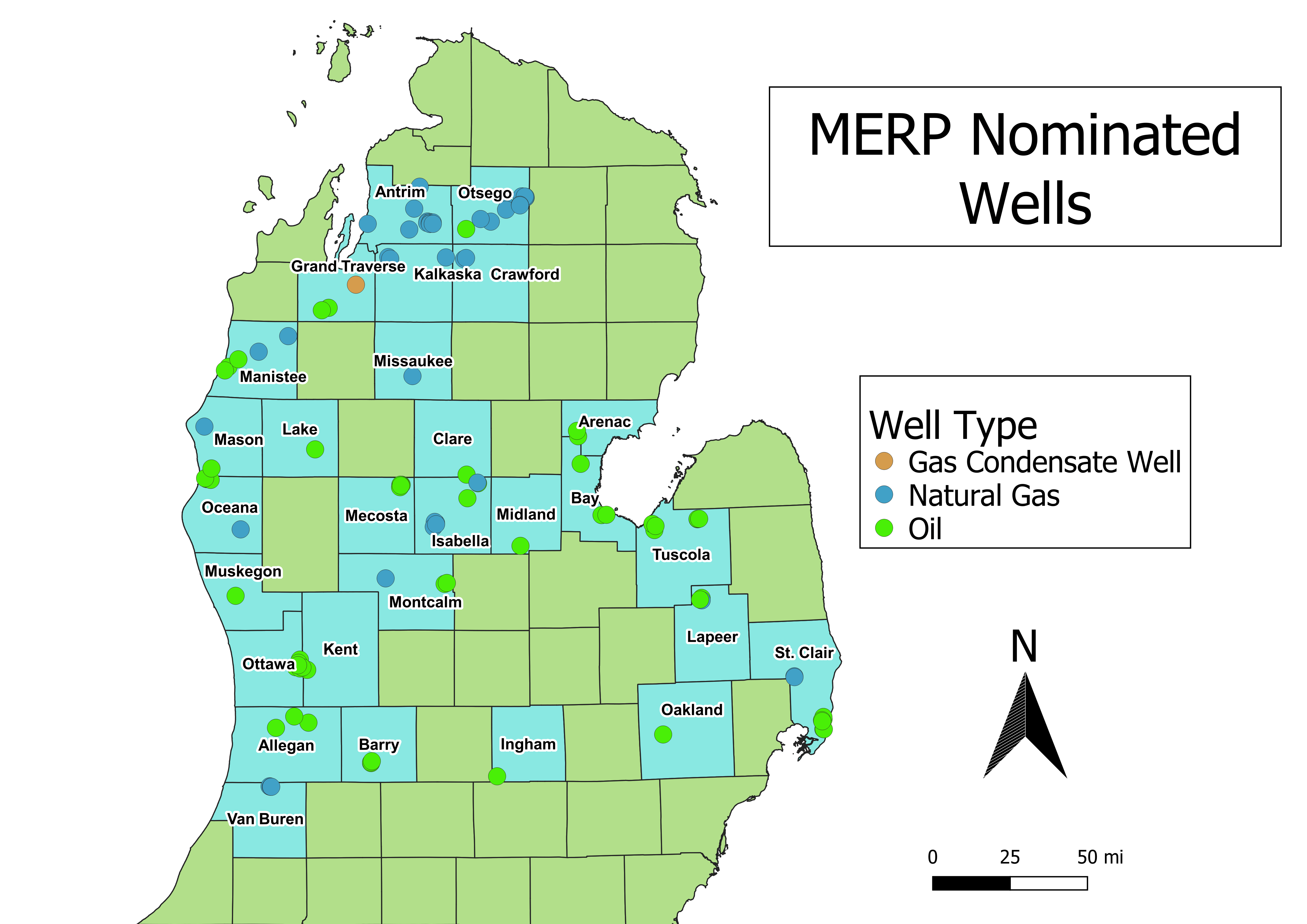
The Geologic Resources Management Division (GRMD) will be accepting nominations of MCWs from operators of Michigan oil and gas wells. Wells that are nominated will be reviewed by GRMD staff to ensure they meet program requirements. Program eligible wells will go through a ranking process with criteria that will include, but not limited to, the rate of methane emission, well age and construction, proximity to environmentally sensitive areas, well production data, and known or potential impacts on groundwater. Plugging grants will be awarded in order of the final well rankings until available MERP funds for plugging have been allocated. The wells selected for grant funded plugging will be subject to measurement of methane emissions for screening purposes, as well as pre- and post-plugging methane measurements.
Program objectives
- Reduce methane emissions through the plugging of MCWs.
- Reduce environmental risks through plugging of aging MCW infrastructure or MCWs in environmentally sensitive areas.
- Return land to beneficial uses for the local communities.
Program priorities
- Provide financial assistance in a transparent and structured manner, in accordance with established program guidelines, to assist operators or landowners in properly plugging MCWs to reduce methane emissions across the state