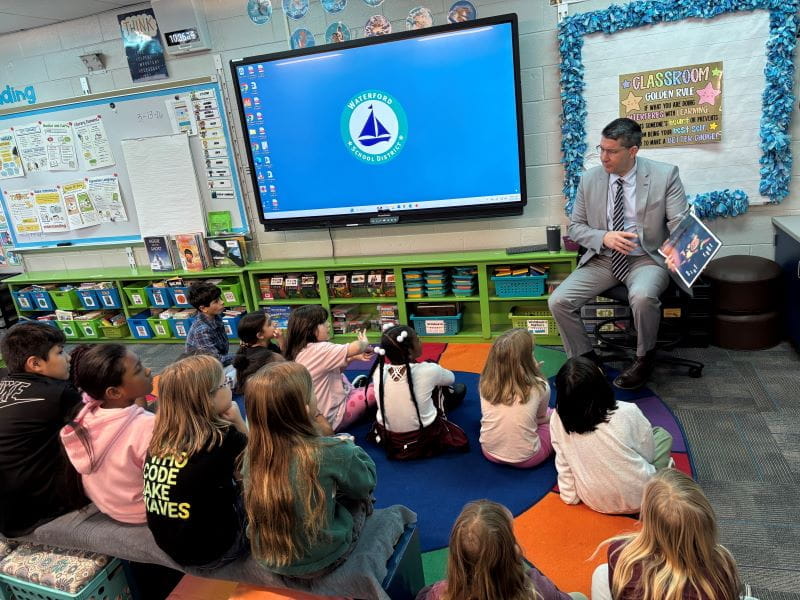
State Superintendent Dr. Glenn Maleyko reads to a 3rd grade class at Haviland Elementary, Waterford School District.
Student Reading Demonstration, Early Childhood Classroom Visits Showcase
Michigan’s Commitment to Improving Literacy
LANSING – State education leaders joined local educators and students today at Waterford School District to highlight Michigan’s commitment to improving literacy through the “Every Child Reads” strategy and Gov. Gretchen Whitmer’s proposed historic investment in reading instruction.
The Michigan Departments of Education (MDE) and Lifelong Education, Advancement, and Potential (MiLEAP), alongside Waterford School District, hosted events at Haviland Elementary School and Stepanski Early Childhood Center as part of March is Reading Month, celebrating the role educators, families and communities play in helping every child become a strong reader.
“Waterford School District is a great example of the strong work happening across Michigan to improve literacy,” said State Superintendent Dr. Glenn Maleyko. “Through programs like Language Essentials for Teachers of Reading and Spelling (LETRS), educators are bringing the science of reading into classrooms, helping students build the skills they need to succeed. Gov. Whitmer’s proposed literacy investment would help expand this work so more teachers receive training and more students get the support they need as we move closer to our shared goal that every child in Michigan becomes a strong reader.”
The science of reading is evidence-based research that creates an understanding of the skills and processes needed to read and helps educators teach those skills effectively. It involves literacy instruction that focuses on phonemic awareness (the ability to recognize sound), phonics, fluency, vocabulary and comprehension.
“Strong reading, writing and communication skills are the foundation for everything that follows in a child’s life,” said Dr. Beverly Walker-Griffea, director of MiLEAP. “Through the ‘Every Child Reads’ strategy, MiLEAP and MDE are working together with educators, families and community partners to close literacy gaps and ensure children have the tools they need to succeed. When we invest in literacy—from early learning through the school years—we are investing in Michigan’s future.”
At Haviland Elementary, kindergarten students led a literacy demonstration showcasing instructional strategies aligned with the science of reading and LETRS training.
The event highlighted Governor Whitmer’s fiscal year 2027 executive budget proposal, which includes $625 million for literacy initiatives—the largest one-time literacy investment in Michigan history.
The proposed funding includes major investments in PreK for All, which would expand access to high-quality early learning programs like Michigan’s Great Start Readiness Program (GSRP) so more children begin kindergarten with strong language and literacy skills. The proposal would also support expanded training for educators in evidence-based reading instruction, literacy coaches in classrooms and additional tutoring and out-of-school learning opportunities for students who need extra support.
The events also highlighted the collaboration between state agencies and local districts to support literacy from early childhood through the K–12 years.
Waterford School District leaders emphasized the importance of early learning and evidence-based instruction in building strong literacy outcomes for students.
“In Waterford School District, we believe a strong educational foundation is non-negotiable,” said Adam Martin, superintendent of Waterford School District. “Our teachers have embraced science of reading instruction and LETRS training, and we’re seeing the results in student learning. Investments in early childhood education, like our Great Start Readiness Program at Stepanski Early Childhood Center, help ensure students develop the foundational literacy skills they need for lifelong success.”
During the demonstration, Haviland Elementary teacher Alyssa Korzym and her kindergarten students walked attendees through a foundational skills lesson within HMH Into Reading curriculum using LETRS instructional strategies, including activities designed to strengthen phonics and sound recognition.
“Structured literacy strategies help students connect language comprehension and word recognition so they can become confident readers,” Korzym said. “LETRS training has given educators practical tools we can use every day, and it’s exciting to see our students actively using those strategies as they develop strong reading skills.”
Following the press conference, education leaders visited Stepanski Early Childhood Center, where they read with preschool students and toured the district’s new Great Start Readiness Program facility, highlighting the importance of early learning opportunities in building strong literacy foundations.
Michigan’s “Every Child Reads: Next Steps Forward” strategy outlines a statewide effort to strengthen literacy through early learning investments, evidence-based instruction aligned with the science of reading and expanded support for students who need additional help.
Together, these efforts aim to ensure every child in Michigan has the opportunity to develop strong reading skills and succeed in school and beyond.
Related links:
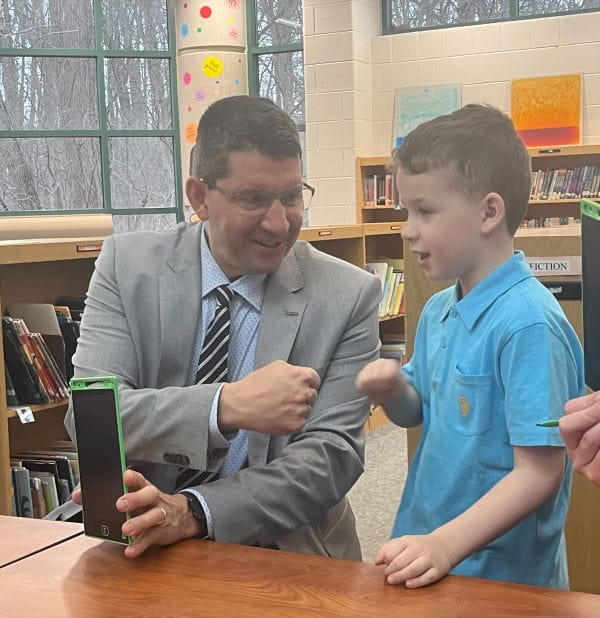
State Superintendent Dr. Glenn Maleyko celebrates with a kindergarten student during a student-led literacy demonstration showcasing instructional strategies aligned with the science of reading and LETRS training.
###