Office of Highway Safety Planning

2030 Placeholder

Office of Highway Safety Planning

Office of Highway Safety Planning

The Office of Highway Safety Planning (OHSP) oversees the distribution and use of federal grant funding to its traffic safety partners with the goal of influencing driver behavior and reducing Michigan roadway crashes, injuries, and fatalities. This is done through relevant data-driven, outcome-based approaches, educational materials, and effective traffic safety programs and outreach campaigns.

The OHSP also administers the Truck Safety Fund, established by Public Act 348 of 1988, with the state-funded grant money managed by the Michigan Truck Safety Commission. The OHSP also administers the state-funded Secondary Road Patrol (SRP) program, which was established by Public Act 416 of 1978.

The OHSP director serves as the Governor's Highway Safety Representative. Alicia Sledge, OHSP director, also serves as chair of the Governor’s Traffic Safety Advisory Commission.

Our Traffic Safety Focus Includes

  • Occupant Protection

    Child Passenger Safety

    What Are Michigan’s Child Passenger Safety Laws?

    Vehicle crashes are the #1 cause of death for young children, but you can reduce your child’s risk of death in a crash by 50 percent just by making sure they're properly restrained in the appropriate car seat, booster seat, or seat belt for their age and size.

    According to updated child passenger safety laws that took effect April 2, 2025, children must be secured in a car seat that is appropriate for their weight and height as indicated by the car seat’s manufacturer. Visit our Child Passenger Safety page for more information.


    Seat belts save lives!

    Buckling up is the single most effective thing you can do to protect yourself in a crash. Seat belts are the best defense against impaired, aggressive, and distracted drivers. Being buckled up during a crash helps keep you safe and secure inside your vehicle. 

    Michigan has a primary seat belt law, which means law enforcement can stop and ticket motorists solely for not being buckled up. The law requires:

    • Passengers 8-15 to buckle up in all seating positions
    • Drivers and front seat passengers to be buckled up
  • Operating a Vehicle While Impaired

    Operating A Vehicle While Impaired

    What is Michigan's Impaired Driving Law?

    It is a crime for a driver to have a bodily alcohol content (BAC) of .08 or greater if over age 21 or .02 or greater if under 21. In addition, Michigan has a high-BAC law with enhanced penalties for anyone caught driving with a BAC of .17 or higher. However, drivers can be arrested at any BAC level if they exhibit signs of impairment while operating a motor vehicle. Do you know the costs for driving impaired?


    What is Michigan's Cannabis Law?

    The use of cannabis is legal in Michigan as long as it takes place in private, such as at the home of the user.

    Where is cannabis use NOT legal?

    Use of cannabis is NOT legal:

    In public places

    • In areas frequented by children, such as schools or school buses
    • In areas that fall under federal jurisdiction rather than state law, such as airports or government buildings
    • While driving a motor vehicle
  • Teen Drivers

    Teen Drivers

    DYK Crashes Are the No. 1 Cause of Death for Adolescents?

    Motor vehicle crashes are the No. 1 cause of death for adolescents. According to the Michigan Department of Health and Human Services, three out of five accidental deaths for teens ages 16-20 are due to motor vehicle crashes. Teen drivers are four times more likely than adult drivers to be involved in a fatal motor vehicle crash, according to the Insurance Institute for Highway Safety.

    Teen Driver Parental Toolkit


    What Is Michigan's Hands Free Law?

    In 2023, Governor Gretchen Whitmer signed into law a bill making it illegal to manually use a cell phone or other mobile electronic device while operating a vehicle on Michigan roads. Under the law, a driver cannot hold or support a phone or other device with any part of their hands, arms, or shoulders.

    Even if a cell phone or other device is mounted on your dashboard or connected to your vehicle’s built-in system, you cannot use your hands to operate it beyond a single touch.

  • Vulnerable Roadway Users

    Vulnerable Roadway Users

    Aging Drivers

    Your independence is vital and driving is a vital skill to get you where you want.

    Safe Drivers Smart Options provides resources for active older drivers, and for drivers who may be considering limiting their driving and finding other transportation choices. Helping maintain lifelong safe mobility is everyone's responsibility, including aging adults, families and friends, and professionals who interact with aging adults. Your goal, and ours, is your safe, lifelong mobility!


    Bicyclist Safety

    What Is Michigan's Bicyclist Safety Law?

    The National Highway Traffic Safety Administration encourages all road users, including motorists and bicyclists, to respect each other and promote a safer transportation environment. Bicycles on the roadway have the same rights and responsibilities as motorized vehicles.

    Michigan law requires motorists to give bicyclists at least 3 feet of space when passing them on the roadway. Some Michigan municipalities have passed laws requiring motorists to give bicyclists 5 feet of space when passing them on the roadway.


    Motorcyclist Safety

    What Is Michigan's Motorcycle Safety Law?

    Every rider should be aware of all Michigan's motor vehicle laws, particularly those which apply specifically to motorcycles. These laws can be found in the Michigan Motorcycle Operator Manual available from the Secretary of State and can be obtained at any Secretary of State branch office. The Michigan Motorcycle Laws Guide for Motorcycle Operators is available for free and found in our Traffic Safety Materials Catalog.


    Pedestrian Safety

    What is Michigan's Pedestrian Safety Law?

    When a pedestrian is struck by a vehicle, more than 80 percent of the time the pedestrian is killed or seriously injured. In Michigan, more than 100 pedestrians die each year. Michigan’s pedestrian safety law outline how both pedestrians and motorists must behave to keep roadways safe.


    School Bus Safety

    What Should Drivers Do When They Come Upon a School Bus With Flashing Lights?

    Drivers should prepare to stop when they see the overhead flashing yellow lights of a school bus and stop at least 20 feet away from a bus when the overhead lights are flashing red.

    Drivers who pass stopped school buses may be charged with civil infractions carrying a fine up to $500. Drivers who pass a stopped school bus and cause an injury face a misdemeanor charge and a fine up to $1,000 and/or up to one year in jail. 

  • Other Driving Situations

    Other Driving Situations

    Deer-Vehicle Crashes

    Do You Know What To Do If You Hit A Deer?

    Nearly 2 million deer make up Michigan’s deer herd. They are most active from April through June and from October through December. During those months, most deer-vehicle crashes take place, although such crashes are a year-round problem. 

    In 2024, more than 58,000 vehicle-deer crashes occurred across Michigan in rural, suburban, and city settings. About 80 percent of those crashes were on two-lane roads. Because deer are most active at dawn and dusk, it is not surprising that most traffic crashes involving deer happen from 8 a.m. to 9 a.m. and 6 p.m. to 9 p.m. Do you know what to do if you hit a deer?


    Distracted Driving

    What is Michigan's Distracted Driving Law?

    Texting is the most alarming distraction because it involves all three types of distraction. According to the National Highway Traffic Safety Administration, driver inattention is the leading factor in most crashes and near-crashes. Michigan's has a hands free law makes holding or manually using a cell phone or other mobile electronic device while operating a vehicle a primary offence - which means an officer can stop and ticket drivers for this violation.


    Drowsy Driving

    Sleepiness and driving is a dangerous combination. Most people are aware of the dangers of drinking and driving but don't realize that drowsy driving can be just as dangerous. Nationally, drowsy driving causes more than 100,000 crashes a year, resulting in 40,000 injuries and 1,550 deaths.


    Speeding

    For more than two decades, speeding has been involved in approximately one-third of all motor vehicle fatalities. Speed also affects your safety even when you are driving at the speed limit but too fast for road conditions, such as during bad weather, when a road is under repair, or in an area at night that isn’t well lit. Speeding endangers not only the life of the speeder, but all roadway users, including pedestrians and bicyclists. It is a problem we all need to help solve.

OHSP logo

Our Mission

The OHSP mission is to save lives and reduce injuries on Michigan roads through leadership, innovation, facilitation, and program support in partnership with other public and private organizations.

MGX logo, OHSP grant system, Michigan Office of Highway Safety Planning grant system logo

OHSP Grant Funding Information

The OHSP receives funding requests for traffic safety programs and activities.  Many factors are considered when determining if a project will be funded.  

vehicle crash, car crash, two car crash, car and truck crash, collision, crash, auto crash

Michigan Traffic Crash Data

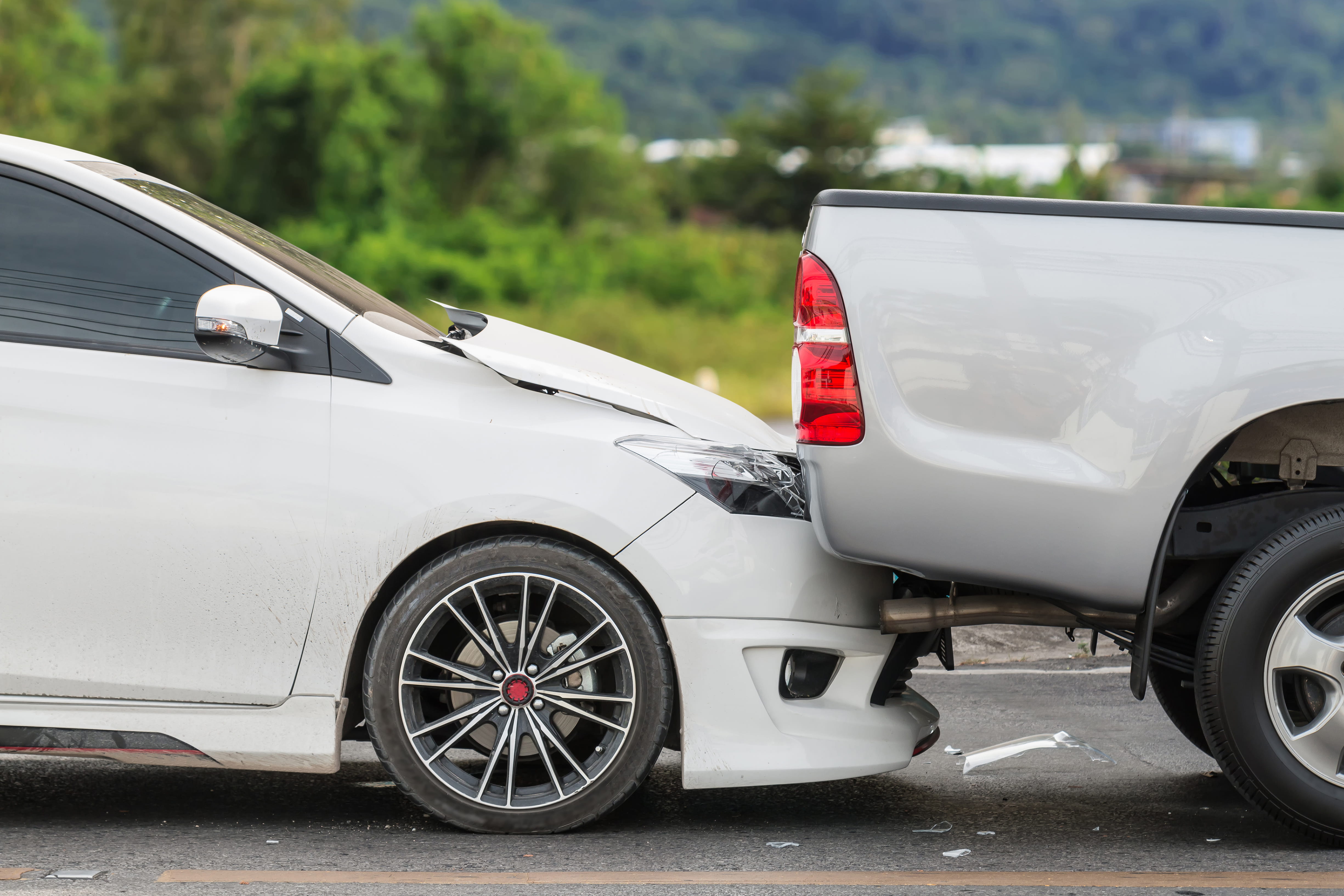
The Michigan State Police Criminal Justice Information Center (CJIC) and the Office of Highway Safety Planning, in conjunction with the University of Michigan Transportation Research Institute (UMTRI), compiles and publishes the annual Michigan Traffic Crash Facts.

OHSP materials catalog

Michigan Traffic Safety Materials Catalog

The Michigan Office of Highway Safety Planning (OHSP) publishes informative brochures, flyers, posters, and other traffic safety-related items that cover a wide range of traffic safety topics,. These materials are available for FREE to Michigan organizations.
Governor's Traffic Safety Advisory Commission logo, GTSAC logo

Governor's Traffic Safety Advisory Commission

The purpose of the GTSAC is to provide leadership in the identification of state and local traffic safety issues and promote recommended strategies to address them.

Michigan Truck Safety Commission logo, MTSC logo, Michigan truck logo

Michigan Truck Safety Commission

We visualize a safer highway transportation environment achieved through the Michigan Truck Safety Commission's leadership in developing and providing truck safety programs.

SAFER by 2030 logo

SAFER By 2030

The SAFER (Statewide Action to Reduce Fatalities Encountered on our Roadways) initiative is a collaborative effort between state agencies and traffic safety partners with the goal of reducing fatalities on Michigan roads by 30 percent by 2030.

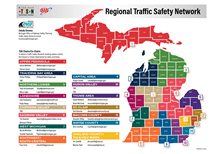
traffic safety network map, TSN map, regional traffic safety networks

Join a Traffic Safety Network

The Traffic Safety Network (TSN) brings together individuals who share a common goal: making Michigan’s roads safer for everyone.

Individuals with disabilities may contact the Michigan State Police ADA Coordinator to request an alternative format to these materials. Please visit Michigan.gov/ADA for a list of state ADA Coordinators.

Connect with OHSP

Physical Address:
7150 Harris Drive Dimondale, MI 48821

Mailing Address:
P.O. Box 30634 Lansing, MI 48909

Phone: 517-284-3332
Fax: 517-284-3338

Like OHSP on Facebook

Follow OHSP on X

Watch OHSP on YouTube