Our new AI chatbot is designed to help you find information more easily on our website. Look for it in the bottom right corner of your screen.
STEM Toolbox
STEM Toolbox
A New Playbook for STEM Learning Is Here
People just like you in communities across the state are working together to reimagine the STEM learning environment in Michigan. MiSTEM Playbooks provide a road map for local community leaders to design and implement problem-, project- and place-based learning (3P) for youth in grades PK-12. Each playbook includes real-world examples, advice, resources and best practices to bring STEM learning to life. Check out a unique example of 3P learning in the Freshwater Literacy and Stewardship Playbook below.
Preview the First MiSTEM Playbook
Freshwater Literacy and Stewardship
See how your community can cultivate environmental literacy by stewarding natural resources like lakes, rivers, streams and other bodies of fresh water.
Freshwater literacy and stewardship is a place-based approach to learning. Check out additional modules below to see how this 3P approach transforms STEM learning by leveraging the unique resources in each community.
-
Five people in an office collaboration setting discussing something
Professional Development for Educators
Diverse training opportunities foster innovative teaching strategies.
-
teacher outside discussing something with eight young children
Supportive School Policies and Structures
Learn how school policies can support robust STEM education inside and outside the classroom.
-
young girl outside looking at plants through a magnifying glass
Place-Based Education
Place-based education empowers youth to reimagine their local community as a resource for learning and problem-solving.
-
teenage students engaging in experiential learning
Community Partnerships
Partnerships between schools and local organizations can connect youth to unique, experiential learning opportunities that reflect the workforce of their communities.
Watch this page in 2023 for new Playbooks and implementation toolkits on topics like Balancing Voices, Strategic Business Partnerships, Culturally Responsive School Leadership, Computer Science, Fiscal Guidance and Transformative Leadership.
Case Study in 3P Learning: Students learn to Manage a Local Forest
What happens when youth apply 21st-century skills like critical thinking, collaboration and problem-solving in their own backyard? Working together, township officials, teachers, parents and students at Washington Middle School turned a local park into an opportunity for sixth and seventh graders to learn forestry management and planning.
A Transformative Approach to STEM Learning
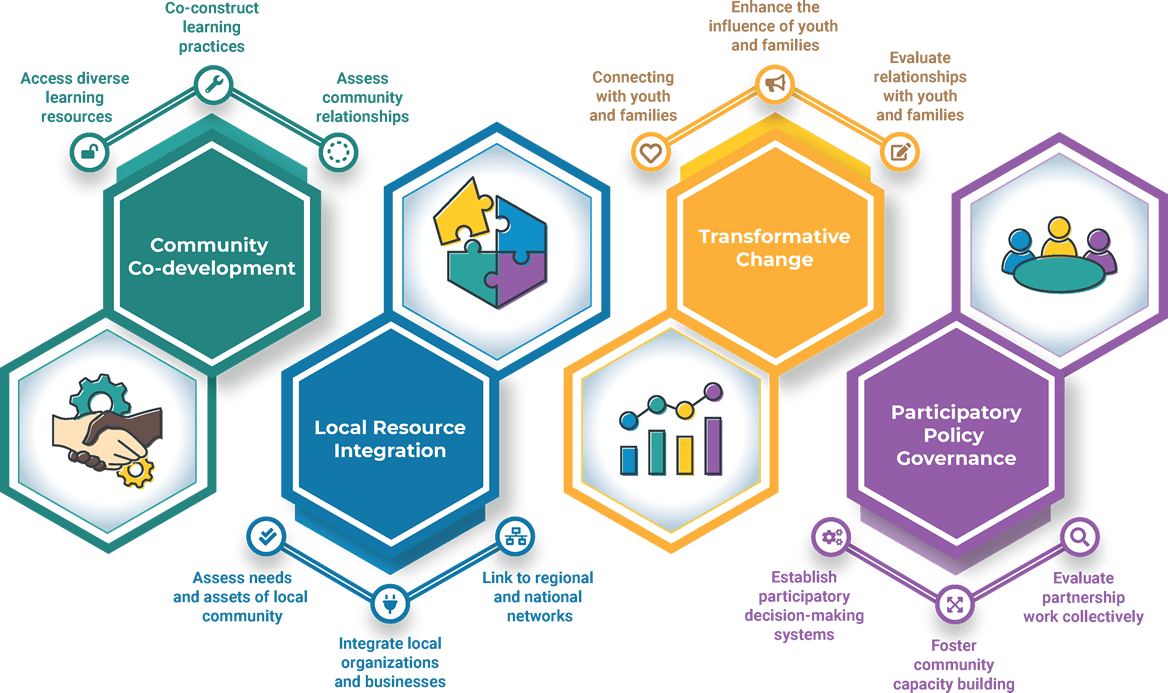
The Transformative Change Model shows how local organizations, in participation with individuals and government, can transform the culture of STEM learning in Michigan. When youth take part in transformative learning close to home, it not only ignites their curiosity, but the experience makes them reconsider the possibilities all around them. For MiSTEM, a future-ready Michigan is driven by equitable access to incredible learning experiences that put youth and their families on a pathway to prosperity and innovation.

The "3P" Approach to Learning
Problem
When was the last time you had to solve a problem? Did it spark curiosity or creativity? Problem-based learning allows youth to learn about a subject through the experience of solving an open-ended problem. This approach encourages exploration, experimentation and communication through enhanced group collaboration.
Project
Do you find it easier to understand a new concept when it’s brought to life? Project-based learning revolves around creating something tangible, such as a product, performance or event. Youth learn around a sustained, real-world project and engage in hands-on activities such as research, scientific exploration, writing and multimedia production.
Place
Ready to inspire students to be leaders with the power to positively impact their community? With place-based learning, young people strive to solve community problems, immersing themselves in the reality of what it means to address cultural, economic, environmental and geographical issues specific to a location. They develop a connection to their community and the confidence to collaborate and connect with others.
Want the latest updates on STEM learning in Michigan? Sign up for our newsletter.