The Rural Development Fund Board, housed in the Office of Rural Prosperity, has oversight of the Rural Development Fund. The Board is charged with advising the Office on how to distribute tax revenue collected from mines to improve and strengthen local communities. Director is a voting member and makes final decision on projects (Public Act 411 of 2012).
The web Browser you are currently using is unsupported, and some features of this site may not work as intended. Please update to a modern browser such as Chrome, Firefox or Edge to experience all features Michigan.gov has to offer.
Operating Engineers Local 324 members gain expanded pathway to college credit through apprenticeships
October 13, 2026
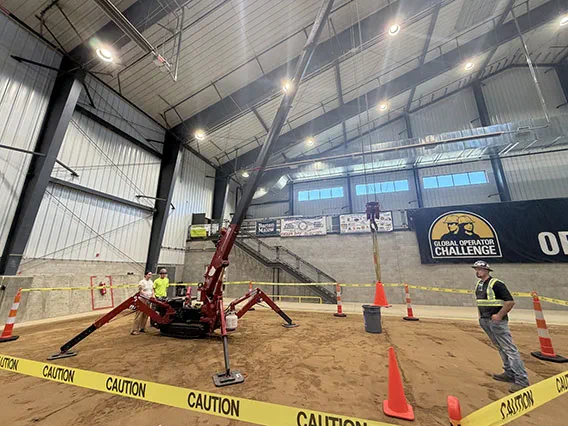
LEO and Operating Engineers Local 324 celebrated a signing agreement with the Michigan Community College Association
HOWELL, Mich. — The Michigan Department of Labor and Economic Opportunity (LEO) joined partners at Operating Engineers Local 324 for a signing ceremony to celebrate awarding college credit to workers who complete building trades Registered Apprenticeship programs through LEO’s recently launched Michigan College Credit for Apprenticeships Program.
The Michigan College Credit for Apprenticeships Program was launched in partnership with the state’s Skilled Building Trades Unions, Michigan Department of Lifelong Education, Advancement, and Potential (MiLEAP), Michigan Community College Association (MCCA) and the Michigan Workforce Development Board to award college credit for the rigorous on-the-job learning that occurs through registered apprenticeship training.
“The Michigan College Credit for Apprenticeships program is helping learners start out ahead of the game by receiving college credit and world-class training,” said LEO Director Susan Corbin. “The program helps more apprentices earn college credit while learning in-demand skills through their trade – providing increased career flexibility and earning power.”
The Michigan College Credit for Apprenticeships Program strengthens pathways for trades workers to learn new technologies, start their own business, move into project management, pursue union leadership and more. In many cases, apprenticeship completers will only need to take a semester of community college courses to finish an associate’s degree.
“The Michigan College Credit for Apprenticeships Program ensures workers can keep building on their skills and explore new opportunities at any stage in their careers,” said Michigan Workforce Development Board Executive Director & LEO Chief of Staff Jessica Brousseau. “The Michigan Workforce Development Board and LEO are proud to have launched and championed this program and look forward to continuing to work with our labor and higher education partners to ensure learning is recognized wherever it occurs and employers have access to the talent they need to thrive.”
To date, 12 Skilled Building Trade Unions have signed up to participate in the program and have either completed or are undergoing the curriculum evaluation process to determine credit transfer totals, including:
International Association of Bridge, Structural, Ornamental and Reinforcing Iron Workers (IW)
International Association of Heat and Frost Insulators and Allied Workers (Insulators)
International Association of Sheet Metal, Air, Rail, and Transportation Workers (SMART)
International Brotherhood of Boilermakers, Iron Ship Builders, Blacksmiths, Forgers and Helpers (Boilermakers)
International Brotherhood of Electrical Workers (IBEW)
International Union of Bricklayers and Allied Craftworkers (BAC)
International Union of Operating Engineers (IUOE)
International Union of Painters and Allied Trades (IUPAT)
Laborers’ International Union of North America (LIUNA)
Operative Plasterers’ and Cement Masons’ International Association (OPCMIA)
Northern Midwest Regional Council of Carpenters (Carpenters/Millwrights)
United Union of Roofers, Waterproofers, and Allied Workers (Roofers)
“This agreement is the result of a great deal of hard work and collaboration, and we are grateful to Michigan LEO, the American Council on Education, the Michigan Community College Association and our community college partners, our employers and the professional trades across Michigan that helped make it possible,” said Lee Graham, Executive Director of the Operating Engineers 324 Labor-Management Education Committee, member of the Michigan Workforce Development Board and Chairman of the Michigan Apprenticeship Steering Committee, Inc. “Registered Apprenticeship works because labor, employers, educators and industry partners come together around a shared commitment to developing a highly skilled workforce. That partnership is one of the things that makes registered apprenticeship so valuable to our industry. By connecting that training with college credit, we are giving our members even more opportunities to advance in the field, grow into leadership roles, and pursue new possibilities in their careers, their businesses and their lives. We are proud to congratulate all of the trades and organizations involved in bringing this effort together.”
“Operating Engineers 324 has long known that Registered Apprenticeship programs like ours provide education and training every bit as rigorous and valuable as what students receive in a traditional college setting,” said Operating Engineers 324 Training Director Heath Salisbury. “This recognition helps codify that by translating our gold-standard apprenticeship training into college credit. We’re excited to add those credits to the career-long education we provide our apprentices and members, opening the door to even greater opportunities within our union, our industry and beyond.”
Twenty-nine of Michigan's public and tribal community colleges have agreed to accept Michigan College Credit for Apprenticeships Program credits. This effort builds on existing local agreements between community colleges and Building Trade Unions that award credit for prior learning to ensure this opportunity is available to Trades Workers across the state.
“Bay de Noc Community College has long partnered with regional employers and labor leaders to recognize learning wherever it occurs and create stronger pathways for workers to continue their education,” said Dr. Nerita Hughes, President of Bay de Noc College. “I am pleased to see these innovative partnerships established statewide through the Michigan College Credit for Apprenticeships Program so more Michiganders can access the affordable, high-quality training they need to continue building their careers.”
“Learning happens in many settings, and the skills Michiganders gain through registered apprenticeship programs should count toward their educational and career goals,” said Sarah Szurpicki, deputy director of MiLEAP’s Office of Higher Education. “As more higher education institutions and building trades come together through this growing partnership, we’re creating more opportunities for Michiganders to turn the experience they’ve earned into college credit toward a degree and a strong career, which strengthens Michigan’s economy and helps advance our Sixty by 30 goal.”
“The Michigan College Credit for Apprenticeships Program recognizes that rigorous, hands-on apprenticeship training has real value in the classroom and in the workforce,” said Brandy Johnson, president of the Michigan Community College Association. “This partnership gives Operating Engineers across Michigan a new opportunity to build on the skills they’ve already earned and put that experience toward a valuable college credential that can open doors throughout their careers.”
As more trades complete their curriculum evaluations and community colleges finalize their credit mapping, the list of participating institutions will continue to grow.