The program's mobile veterinary unit will support the development of new generations of animal health professionals, ensuring the continued protection of animal and public health throughout Michigan
LANSING, Mich.— Today, in honor of World Veterinary Day (April 25, 2026), the Michigan Department of Agriculture and Rural Development (MDARD) and the Michigan State University College of Veterinary Medicine (MSU CVM) are proud to announce the upcoming launch of the new mobile veterinary unit for the Community Medicine Program, ensuring veterinary and veterinary nursing students will have additional opportunities to refine their skill set while improving access to veterinary care in underserved communities across Michigan.
"By vaccinating animals, offering guidance and education to animal owners, and reporting reportable diseases, Michigan s veterinary health professionals are crucial to creating healthier and safer communities," said State Veterinarian Dr. Nora Wineland, DVM, MS, DACVPM. "However, with the current veterinary shortages being experienced in Michigan and around the country, more support for veterinarians is needed as the demand for their services and expertise keeps increasing. We hope the opportunities and experiences offered through this new mobile veterinary unit will ignite a career-long passion to protect animal health and serve the underserved."
World Veterinary Day is a day devoted to recognizing the valuable and essential contributions of veterinary health professionals in maintaining animal and public health. Their guidance, insights, and feedback are fundamental to identifying cases of zoonotic diseases (diseases impacting both animals and people like rabies, West Nile virus, and bovine tuberculosis) and helping to limit the spread and risk posed by those diseases. Healthy animals create the foundation for healthy communities.
However, this system can become compromised when there is a lack of access to veterinary care. In December 2023, MDARD and MSU College of Veterinary Medicine announced the start of a new Community Medicine Program aimed at connecting veterinary students to animal welfare organizations and local animal shelters who are in desperate need of veterinary services, helping to alleviate some of the pressures felt by high patient volumes and the need for adequate staffing and resources by local veterinary clinics.
"This initiative brings together education and service in a way that benefits both our students and the communities we serve," said Dr. Kelley Meyers, Executive Director of the MSU Veterinary Medical Center. "By partnering with animal welfare organizations, our veterinary and veterinary nursing students gain valuable surgical experience while building the skills and perspective needed to make a meaningful impact in diverse communities throughout their careers."
"It's rare for two distinct needs to align so perfectly. While our students are eager for the surgical experience necessary to grow as clinicians, countless animals across Michigan require sterilization and care to become eligible for adoption," said Dr. David Emery, Assistant Professor and lead clinician of the Community Medicine Program. "This partnership bridges that gap by enriching veterinary education while providing life-saving services to animals who might otherwise go without."
Maintaining the health and well-being of Michigan's animals is a collaborative effort. More collaborators result in better protection of the state's domestic animals from disease and a healthier Michigan. To learn more about the Community Medicine Program, please visit MSU College of Veterinary Medicine's website.
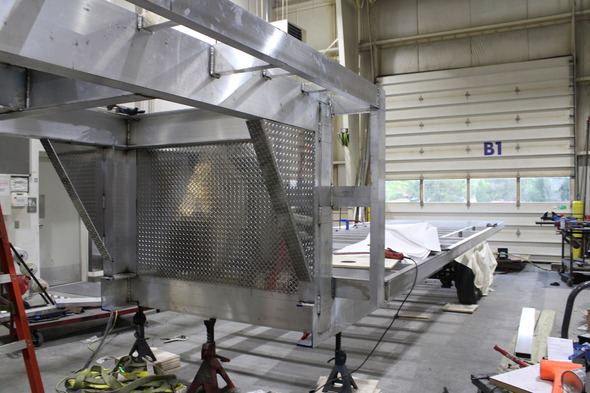
The mobile veterinary unit to be used in the Community Medicine Program in its earliest stages of construction.
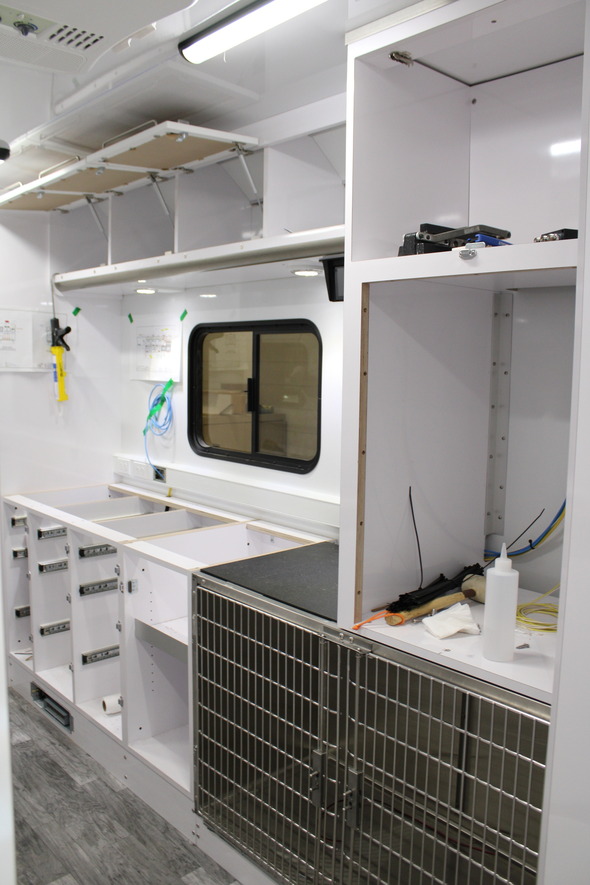
Early construction of the interior of the mobile veterinary unit, before being outfitted with stainless steel surfaces.
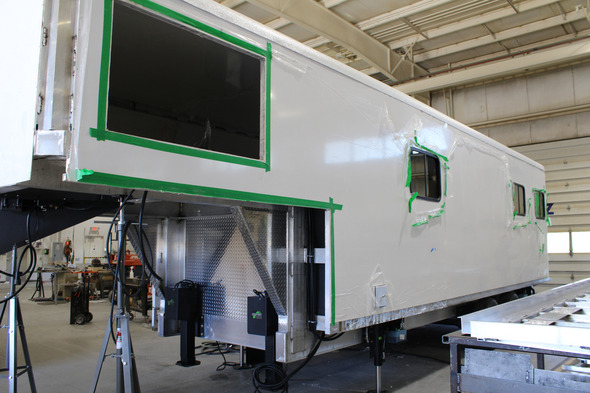
The mobile veterinary unit to be used in the Community Medicine Program before its complete exterior and wrap were applied.
###