


Background
New World screwworm (NWS) is a parasitic worm detected in Texas and New Mexico in June 2026. This is not an infectious disease and currently, there are no detections of New World screwworm in Michigan. Checking animals for enlarging wounds, maggots, and other signs of infestation or discomfort are key to protecting animal health and keeping this pest out of Michigan.
New World screwworm can affect any warm-blooded animal, including livestock, pets, wildlife, and (in rare cases) people. Occasionally, the larvae also affect wild and domestic bird species.
How do I report?
In Michigan, New World screwworm is an emergency reportable disease in all species. If you suspect your animals may have signs of a screwworm infestation, contact the Michigan Department of Agriculture and Rural Development (MDARD) immediately:
- 800-292-3939 (daytime)
- 517-373-0440 (after-hours)
Is this a food safety issue?
No. New World screwworm is not a food safety issue, and the U.S. food supply remains safe.
What are the health risks to domestic animals?
New World screwworm most often enters an animal through a break in the skin or an exposed mucous membrane and feeds on the animal’s living flesh, causing serious damage to tissue (myiasis) that could be fatal. Even small tick bites can attract NWS flies.
Please note: Not all myiasis is caused by NWS. Other flies—such as botflies and blowflies—can also cause similar infestations. The identification of NWS requires analysis from an entomologist, which is why reporting suspect cases is crucial to protecting the state from this pest.
What does New World screwworm and their infestations look like?
Screwworm infestations are difficult to detect at first. Be sure to check animals for draining or enlarging wounds, signs of discomfort/irritation, and the smell of decay. Also, look for screwworm larvae or eggs, which are creamy white in color and deposited near the edges of superficial wounds.
Adult screwworm flies are about the size of a common housefly or slightly larger and have orange eyes, a metallic blue or green body, and three dark stripes along their back.
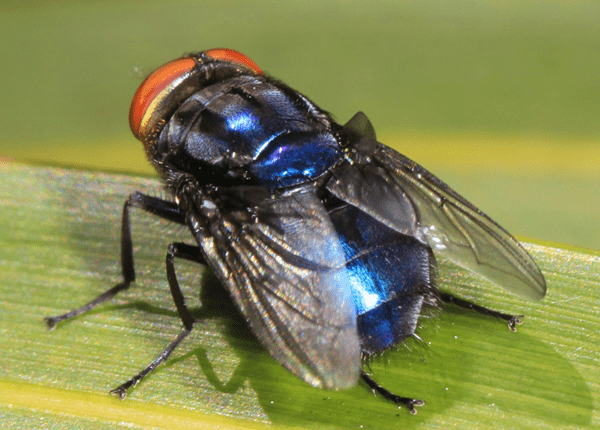
Photo by Judy Gallagher (CC BY 4.0)
How can animals best be protected from New World screwworm?
- Inspect animals regularly: Check animals routinely for unhealing wounds, odors, or changes in behavior, especially if animals have travelled to or from areas known to have active NWS infestations.
- Implement an integrated pest management plan: Less flies equal less risk. Develop an integrated pest management plan to reduce all types of unwanted pests around your premises.
- Contact a veterinarian: If you have questions about the health of your animals and how to best protect them from NWS and other pests, please contact your veterinarian.
As with any reportable disease, your vigilance is key to keeping Michigan’s domestic animals healthy and safe. Please do not hesitate to reach out if you have a suspect case.
Resources
- For the latest on current cases and the unified federal government’s response to NWS, please visit Screwworm.gov.
- New FDA Issues Emergency Use Authorization for Drug to Treat New World Screwworm in Dogs and Puppies
- For the most up-to-date information on treatments and resources for veterinary health professionals, visit:
- New World screwworm: Information for Veterinarians (FDA)
- New World screwworm: Be Aware and Prepare (PDF) (USDA)
- Stop screwworm (USDA)
- New FDA-Conditionally Approved and Authorized Animal Drug Options for New World Screwworm: infographic summarizing products authorized for NWS
- For additional information on NWS and human health, visit the Centers for Disease Control and Prevention.
- For more information about reportable animal diseases in Michigan, visit MDARD’s Reportable Diseases website.