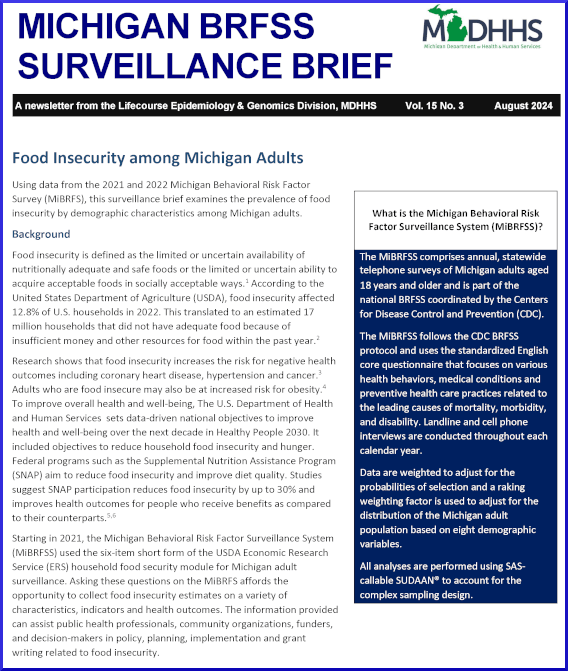
The Michigan Behavioral Risk Factor Surveillance System (MiBRFSS) is composed of annual, state-level telephone surveys of Michigan residents, aged 18 years and older. It is a main data source for physical activity, nutrition, and weight status.
The national Behavioral Risk Factor Surveillance System (BRFSS) consists of annual surveys (i.e., BRFS) conducted independently by the states, District of Columbia, and U.S. territories, and is coordinated through cooperative agreements with the Centers for Disease Control and Prevention (CDC).
The Michigan Women, Infants, and Children (WIC) program is a supplemental nutrition program that helps women, infants and children through an important time of growth and development. The WIC Data and System Management provides access to system release information, WIC research, reports and system policies. and processes.
The WIC Data and Reports webpage provides a variety of information, including Pregnancy Nutrition Surveillance System (PNSS) and the Pediatric Nutrition Surveillance System (PedNSS) reports, which present information on the demographic composition and health status of women and health outcomes of infants and children enrolled on the WIC Program.
In addition, the Michigan WIC program has developed several surveillance trend reports, briefs and publications specific to Michigan's state and local WIC agencies. These include the Biannual Breastfeeding Rate and Duration Report, which depicts infants' duration of breastfeeding and shows the drop off of clients at each breastfeeding duration interval, and the Breastfeeding Addendum Report, which examines breastfeeding prevalence by race/ethnicity at the local agency level.