Infectious Disease Outbreaks

This page provides information on current and recent infectious disease outbreaks in Michigan, including case counts, outbreak updates, and resources for the public and health care providers.

Cyclosporiasis Outbreak 

MDHHS is investigating an outbreak of cyclosporiasis in Michigan. The source of the outbreak has not been identified, and MDHHS continues to work with local health departments and partners to investigate cases and provide updates as more information becomes available.

Michigan Case Counts

Total Cases: 1,251 
To date, 44 reported cases indicated they had been hospitalized.

Last updated: July 9, 2026

Data notes

  • Case counts reflect all cases of cyclosporiasis reported during the outbreak investigation period and may change as additional information becomes available.
  • Case counts reflect data reported through 9:30 a.m. Eastern Time.
  • Total case counts are updated daily, Monday through Friday, by 11:00 a.m. Eastern Time.
  • Hospitalization status and detailed outbreak data are updated weekly on Thursdays.

News and Updates

Resources

Detailed Outbreak Data

  •  

    County/Jurisdiction

    Number Cyclosporiasis Cases Reported

    Allegan 2
    Barry 1
    Benzie 1
    Calhoun 2
    Cass 2
    Charlevoix 2
    Clinton 12
    Detroit City 12
    Eaton 12
    Emmet 1
    Genesee 35
    Grand Traverse 1
    Gratiot 17
    Hillsdale 6
    Houghton 1
    Huron 26
    Ingham 55
    Ionia 14
    Isabella 2
    Jackson 56
    Kalamazoo 6
    Kent 9
    Lapeer 4
    Leelanau 1
    Lenawee 105
    Livingston 40
    Macomb 15
    Manistee 1
    Mason 2
    Midland 2
    Monroe 215
    Montcalm 6
    Muskegon 25
    Oakland 88
    Otsego 1
    Ottawa 15
    Saginaw 13
    Sanilac 21
    Shiawassee 82
    St. Clair 4
    St Joseph 3
    Tuscola 12
    Washtenaw 159
    Wayne 160

    Last Update: July 9, 2026

    Data notes

    • Case counts reflect all cases of cyclosporiasis reported during the outbreak investigation period and may change as additional information becomes available.
    • Case counts reflect data reported through 9:30 a.m. Eastern Time.


  •  

    Age Group

    Number of Cases

    0-9 years 6
    10-19 years 42
    20-29 years 192
    30-39 years 285
    40-49 years 237
    50-59 years 211
    60-69 years 157
    70-79 years 91
    80-89 years 26
    90 years and above 1

    Last update: July 9, 2026

    Data notes

    • Case counts reflect all cases of cyclosporiasis reported during the outbreak investigation period and may change as additional information becomes available.
    • Case counts reflect data reported through 9:30 a.m. Eastern Time.

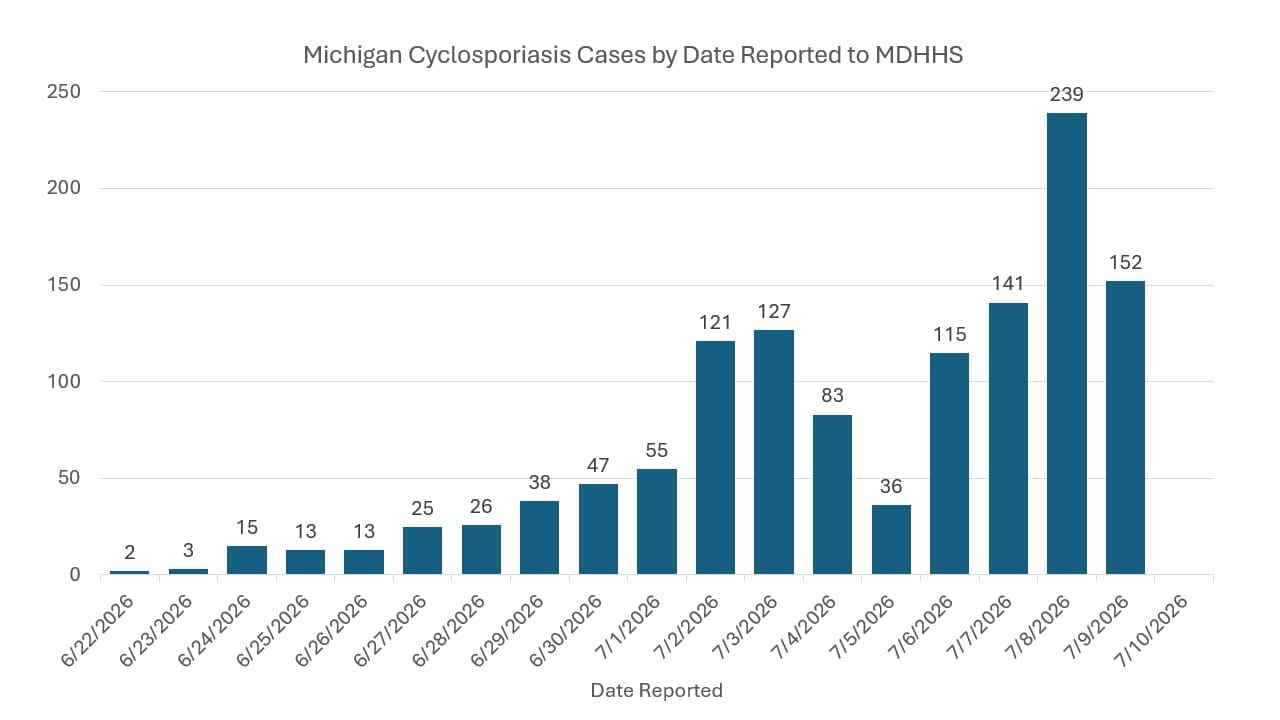
  • This graph shows the cyclosporiasis cases reported to MDHHS from June 22, 2026, through July 9, 2026.

    This graph shows the cyclosporiasis cases reported to MDHHS from June 22, 2026, through July 9, 2026.

    Last update: July 9, 2026


Recommended actions for individuals who think they may have cyclosporiasis:

People experiencing gastrointestinal illness, such as sudden and ongoing diarrhea, are encouraged to contact their health care provider for testing and treatment. For general questions about the cyclosporiasis outbreak, contact your local health department. Cyclosporiasis is treated with antibiotics along with rest and drinking plenty of fluids to maintain hydration.

Recommended precautions for restaurants, commercial kitchens, and other entities preparing or serving raw produce in Southeast Michigan:

  • Lettuce and leafy greens: Purchase whole heads of lettuce rather than prewashed, bagged lettuce or salad mixes. Remove the outer two to three leaves and wash the remaining leaves under running water. Cook leafy greens when possible.
  • Cilantro and basil: Separate the leaves and wash thoroughly under running water. Cooking is the safest option.
  • Green onions: Trim the root end, remove the outer layer, and wash thoroughly under running water. Cooking is the safest option.
  • Raspberries: Because their surface is difficult to clean, consider using cooked raspberries (such as in pies or jams) or frozen raspberries. Freezing may reduce, but does not eliminate, the parasite.
  • Snow peas: Wash thoroughly under running water while rubbing the surface. Cooking is the safest option.

General practices to reduce your risk of cyclosporiasis and other foodborne illnesses:

  • Cook when you can. Heating food to 158°F (70°C) or higher kills Cyclospora.
  • Wash all fresh produce under clean running water, even if you plan to peel it.

Additional food safety reminders:

  • Wash hands with soap and water before and after handling or preparing food.
  • Scrub firm fruits and vegetables, such as melons and cucumbers, with a clean produce brush.
  • Cut away any damaged or bruised areas on fruits and vegetables before preparing and eating.
  • Wash and sanitize utensils and surfaces before and after handling food. Wash and sanitize display cases and refrigerators where fresh produce is stored.
  • Wash and sanitize cutting boards, surfaces and utensils used to prepare, serve or store fresh produce.
  • Refrigerate cut, peeled or cooked fruits and vegetables as soon as possible.