The web Browser you are currently using is unsupported, and some features of this site may not work as intended. Please update to a modern browser such as Chrome, Firefox or Edge to experience all features Michigan.gov has to offer.
Results and Reports
We are excited to share reports, articles and publications free of charge. Once available, we will post links on this website to ensure that any research articles and scientific publications using data from MiPEHS are free and available to the public.
A heart-felt thank you to the Michiganders who generously shared their time, health information and blood samples for MiPEHS. The information shared here, and what we have learned about PFAS exposure, would not be possible without the generosity of participants, dedication of the research staff or funding from the State of Michigan.
-
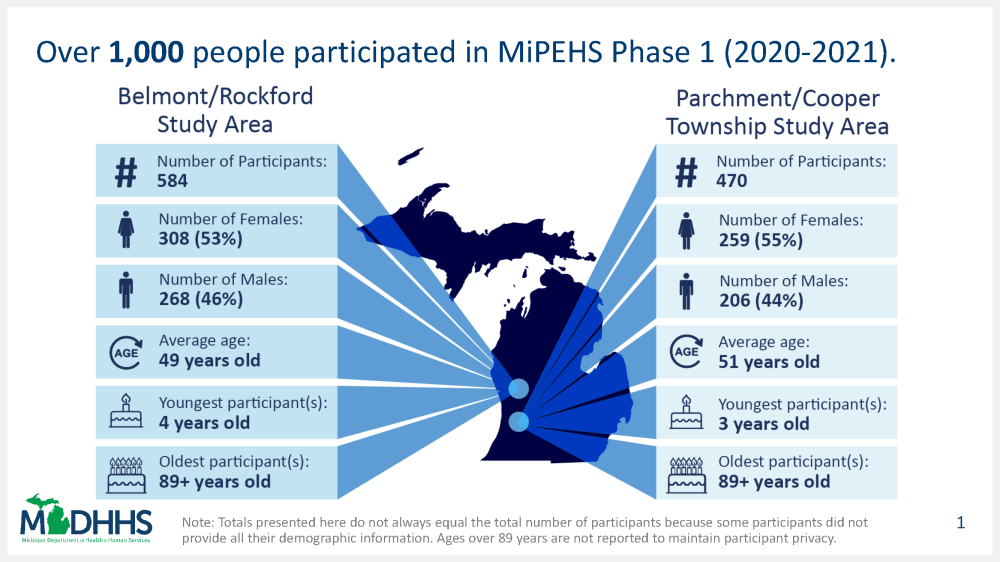
MiPEHS Phase 1 began in late 2020 and ended in the middle of 2021. Over 1,000 people from 700 households in the City of Parchment, Cooper Township, and the Belmont/Rockford Area participated in Phase 1.
To see the first results from Phase 1, read the Phase 1 Summary Report.
If you would like more detail than what is included in the Summary Report, read the Technical Appendix to the Summary Report.
Watch as Dr. Jordan Bailey, one of the MiPEHS researchers, discusses highlights from the first results of MiPEHS Phase 1.
-
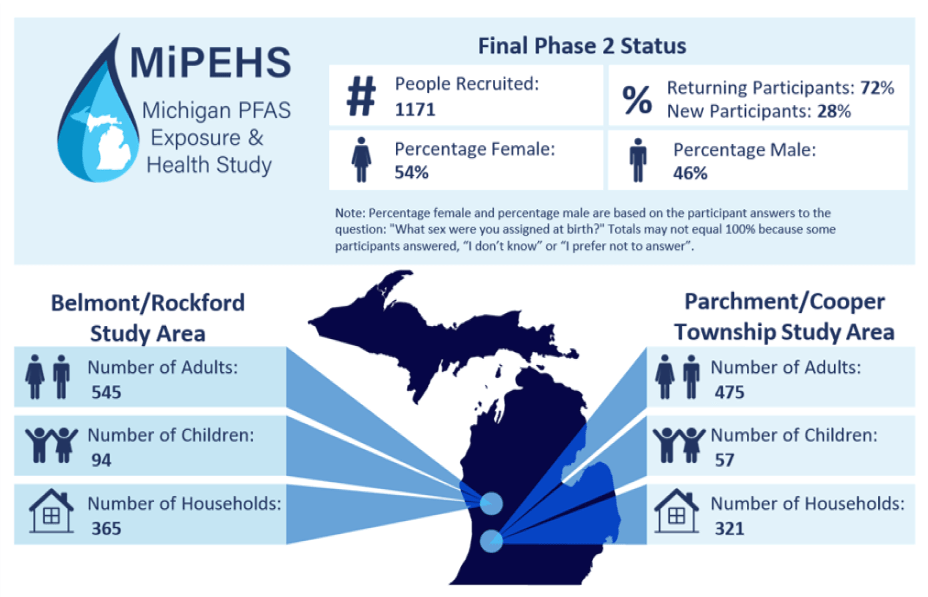
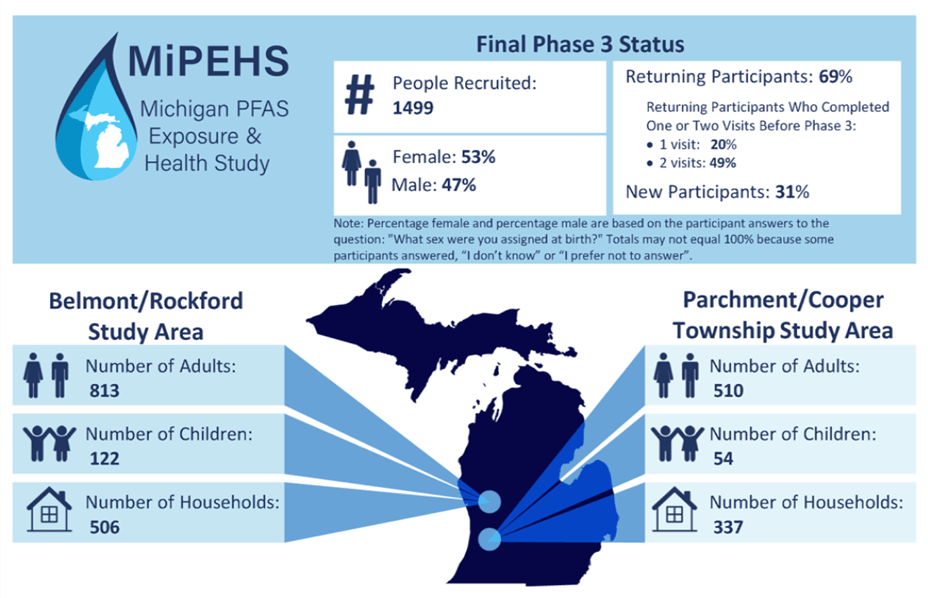
MiPEHS Phase 2 took place in 2023. Over 1,100 people from 686 households in the City of Parchment, Cooper Township and the Belmont/Rockford Area participated in Phase 2.
To see results from Phase 2, read the Phase 2 Summary Report.
If you would like more detail than what is included in the Summary Report, read the Technical Appendix to MiPEHS Summary Reports. Phase 2 details begin on page 48.
-
The MiPEHS team is analyzing all the data collected during the three phases of the study. Results and reports will be freely shared here as they are available.
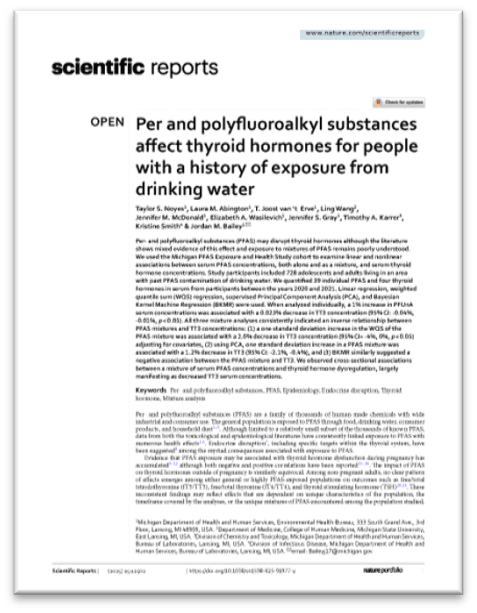
Per and polyfluoroalkyl substances affect thyroid hormones from people with a history of exposure from drinking water. Noyes et al., 2025.
Participants and community members were concerned that past exposure to PFAS might affect their thyroid hormone levels. To address this, MDHHS tested blood samples from participants. They measured three thyroid hormones and compared those to blood PFAS levels.
Results showed two important things:
- People with more PFAS in their blood tended to have slightly lower levels of the thyroid hormone, total triiodothyronine (TT3).
- TT3 levels were not low enough to need medical intervention.
These findings matter because they:
- Address questions raised by residents exposed to high PFAS levels in their drinking water.
- Show that PFAS exposure can have a small but noticeable effect on the body.
- May help health care providers who want to monitor thyroid levels in people who have existing thyroid issues and have been exposed to PFAS in their drinking water.
- Add to what scientists know about how PFAS exposure may affect people’s health.
- Can help leaders and decisionmakers create rules about PFAS in the environment.